Category Archives: Comics
6 Unsung Patriotic Superheroes
Everybody knows about Captain America. He’s a living legend! Plus he had that big, fancy movie earlier this Summer. But you don’t come here to Henchman-4-Hire to read what you already know. You’re here for greater depth in your comic book knowledge. So in honor of Labor Day, I decided to write up a quick list of 6 America-themed superheroes that you probably never heard of.
Some successful. Some not.
6. Uncle Sam:
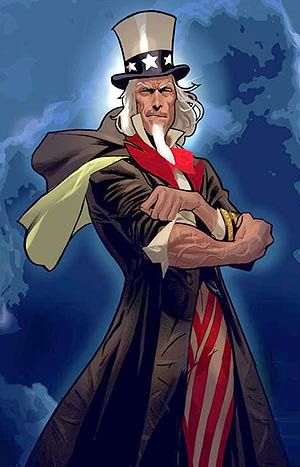
Kicking ass for America!
Yes, the actual and literal Uncle Sam come to life. Starring in DC Comics alongside Superman and Wonder Woman, Uncle Sam was even a supporting character in the Justice League. He’s got a whole host of general super-powers, like super strength, speed, agility and the ability to just plain kick ass. His origin is that the Founding Fathers performed an occult ritual to give the ‘Spirit of America’ a physical form. He served as various guises over the years until finally emerging as Uncle Sam in the late 1800s. Nowadays he’s the leader of the Freedom Fighters, a badass team of super spies and secret agent superheroes working for the U.S. Government.
5. Iron Patriot:
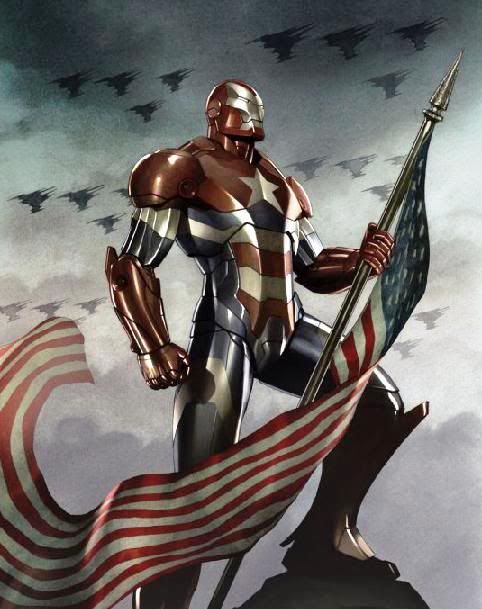
Evil in the name of America!
You’re right, that does look like a cross between Iron Man and Captain America. That’s the point. In reality, it’s the Iron Patriot, the ‘heroic’ guise of Norman Osborn! Remember him from the Spider-Man movie? He was the villainous Green Goblin. Norman Osborn is a crazy man, but he’s also a businessman. And in that capacity, Osborn stayed sane long enough for certain government people to start trusting him. Then he was put in charge of the Thunderbolts, a government team of super-villains being used as heroes.
When he helped repel an alien invasion, Norman was seen as such a hero that the American government put him in charge of H.A.M.M.E.R., a new version of S.H.I.E.L.D. He was America’s top cop, and as such, he formed his own team of Avengers, all of whom were secretly villains posing as heroes. Norman took on the identity of the Iron Patriot, repainting some of Iron Man’s old armors. Stark was on the outs with the government at the time, viewed as a bad guy. For a few months, Norman led the ‘Dark’ Avengers on a few heroic missions. They actually helped people, despite being super-villains in disguise.
In the end, though, Norman bit off more than he could chew by leading his Dark Avengers against Thor and Asgard. He was revealed to be the psycho that he was, and got locked up. Though there are hints that he’s soon to be free and troubling the heroes once again.
4. The Spirit of ’76:

Old timey and fun, I suppose
Now that’s an exciting superhero name! He was created in the 70s as a patriotic hero for Marvel Comics, and his history is that William Naslund wanted to do more for the war effort in World War II. So taking Captain America as an inspiration, Naslund became really athletic and created this costumed identity. He served as a member of The Crusaders alongside a bunch of other random heroes. So basically a poor man’s Captain America serving at around the same time.
When Cap was frozen in the Atlantic (like at the end of his movie), the U.S. Government recruited Naslund to replace him. They gave him a costume and a shield, and Naslund was Cap for a few years before being killed by a robot. Comcis, everybody!
3. Mister America:

Possibly the lamest superhero costume ever
There’s a whole line of superheroes in the DC Universe who go by the name of Mister America. The first one, Tex Thompson, actually debuted in Action Comics #1 in 1938, the same comic that was the first appearance of Superman! As the costume implies, he’s just a dude in some patriotic-colored clothes who has a whip that fights crime. Thompson went on to become the Americommando during World War II.
That picture is from the modern day Mr. America in the pages of Justice Society of America. Similar to the Justice League, the Justice Society is made up of heroes that debuted before Superman and Batman in the comics timeline. It’s a little bit complicated, but essentially the heroes in the Justice Society are all old men in their 50s and 60s, whereas Superman, Batman and their generation are all in their 20s or 30s. In Justice Society, these old heroes are training and working with the next generation of heroes, composed of descendants of old heroes.
Thompson’s descendant debuted in the first issue of a recent JSA relaunch, only to die in that same issue. Dumbass. Then his FBI partner Jeffrey Graves took up the costume and whip and has had a much more successful superhero career.
2. Isiah Bradley and Patriot:
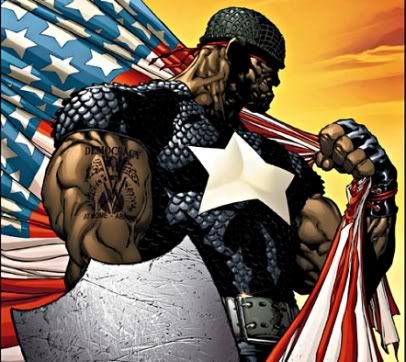
The black Captain America
Did you know there was a black Captain America? In a somewhat controversial comic released a few years ago called Truth: Red, White and Black, it was revealed that after Steve Rogers was given the super soldier serum, the U.S. Government tried to recreate it and conducted secret, often-fatal experiments on African-Americans. It treated them like lab rats. Something akin to the Tuskegee Syphilis Study.
The only survivor of the experiments was Isiah Bradley. He was taken overseas during WWII, and using a stolen Cap costume, he stormed the Nazi’s own attempts to recreate the Super Soldier Program. He successfully defeated the bad guys, but got kidnapped and brought before Hitler himself! Eventually Bradley was saved and returned stateside, only to spend nearly 20 years in federal prison on a court marshal. He eventually got pardoned in the 60s and spent the rest of his life at home, since the experiments had failed to recreate the true Super Soldier Serum and instead left Bradley with a deteriorated mind.
But throughout the years, he became a living legend as the ‘black Captain America’, but that legend only seemed to exist in the black community. He was visited by many important black icons. And eventually, Bradley had a grandson named Eli Bradley.
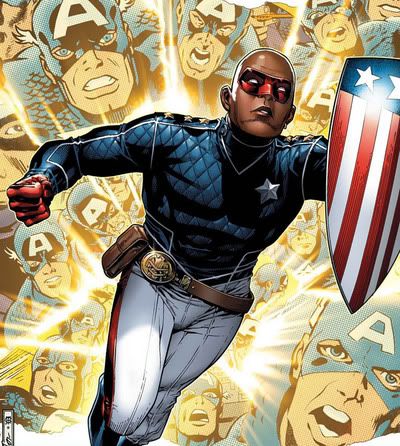
He's like a tiny Captain America!
Eli is the hero known as The Patriot. He’s a member of the Young Avengers. It was a surprise hit series from a few years ago. The idea was silly (kid Avengers?) but the writer hit it out of the park and the Young Avengers became a popular success! They’ve had a few series, since the writer hasn’t exactly been reliable, and they appear now and again in big Marvel stories. Eli was on a short list of young people that the Avengers were keeping track of, and the young version of Iron Man got ahold of the list and put a team together to fight Kang the Conqueror, a time traveling super-villain.
Eli led the team to victory, though it was later revealed that he didn’t have any super powers. He was actually using a recreational drug that gave people super powers. When his friends found out, they turned their backs on him until he cleaned up. Later, Eli was injured and had to get a blood transfusion from his grandfather Isiah Bradley. The super-powered blood from grandpa finally gave Eli powers for real.
1. U.S. Agent:
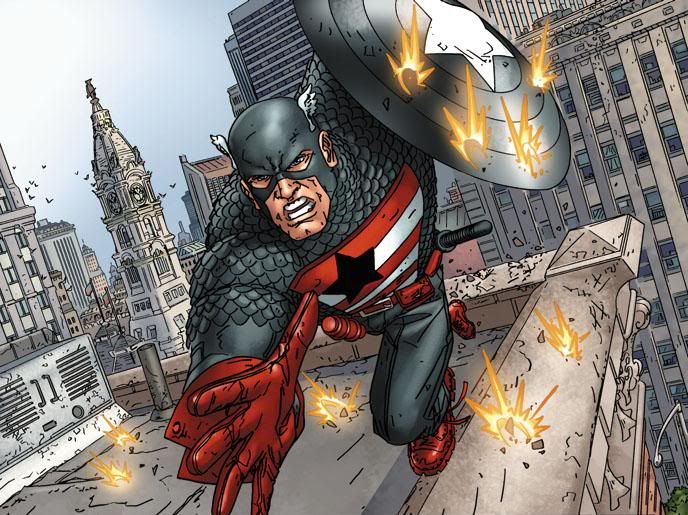
100% American Badass!
The man who would be Captain America! Picture the Captain America you know, now imagine him as far more conservative, badass and something of an arrogant jackass. That’s John Walker! He’s a second-rate Captain America, copying him in powers, costume and shield. But he’s stuck around for years, and has served as both an Avenger and a member of Alpha Flight. He’s a legitimate hero, not just some chump joke. Whereas Steve Rogers is more heroic, good-natured and inspirational, John Walker is just a hard-nosed, brutal ass-kicker. I’m a big fan.
Walker debuted in the 80s as a soldier who, after he was discharged, decided to get some super powers. There’s a villain out there called the Power Broker, and he gave Walker super strength, speed and agility. Powers similar to Captain America. Walker became the Super-Patriot to pay off the Power Broker, and then went around challenging Captain America while also doing good for the country. Eventually, Steve Rogers stepped down as Cap because the government wanted to turn him into something of a lapdog. Cap wasn’t about to be used, even by the U.S. Government, so he resigned. The government then scooped up Walker to be the new Captain America. Much like The Spirit of ’76 once served as a fill-in Cap. But then Rogers eventually came back, and Walker switched to being the U.S. Agent.
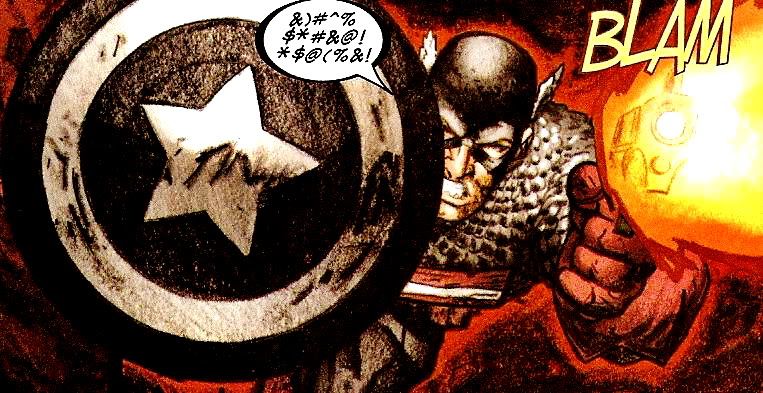
Eat hot patriotism, motha'fuckers!
He continued to serve the U.S. government, and eventually joined both the Avengers and the West Coast Avengers, who were based on the west coast. Yep. He made a few costume changes now and again, jumping in with different teams and organizations, but most recently he returned to his more well-known red, white and black Cap knock-off costume. He was a member of the good guy Avengers again when Norman Osborn led his assault against Thor and Asgard. During the fight, Walker got his arm and legged ripped off. Most people would retire when that happened.
But not John Walker! He just went ahead and got a robotic arm and leg and became the warden of a super-villain prison!
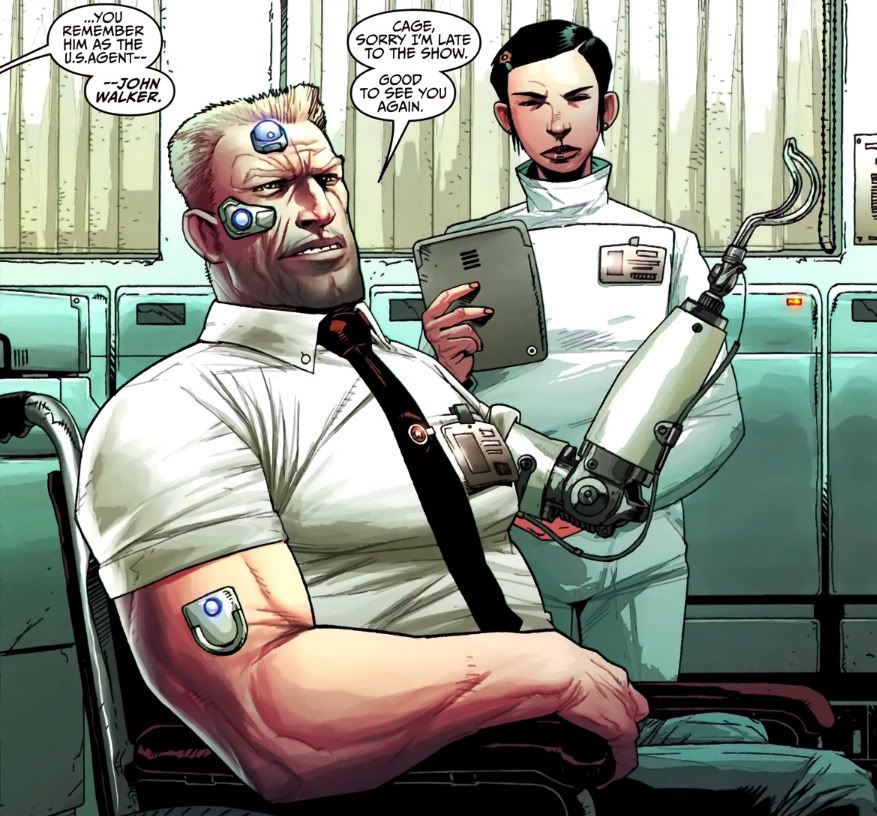
That's just a flesh wound!
Honorable mentions: There are a ton of random American superheroes. I chose some of the main ones from Marvel and DC comics, and that’s not a full list. There’s still Battlestar, Liberty Belle, Major Victory, S.T.R.I.P.E., American Dream, American Eagle; plus heroes from other comic companies like The Shield, Captain Flag, Yankee Girl, American Maid and many more!
Is Madrox on the Chopping Block?
Update: New teaser reveals gives us new hope! Click here.
This just in, Marvel Comics may kill my favorite comic book character of all time! Anyone who remembers my list of My 6 Favorite Comic Book Characters will remember that Jamie Madrox, the Multiple Man, is my absolute favorite. But new teaser images released from his comic, X-Factor, are hinting at the death of Multiple Man sometime this Fall.
Can I not have nice things?
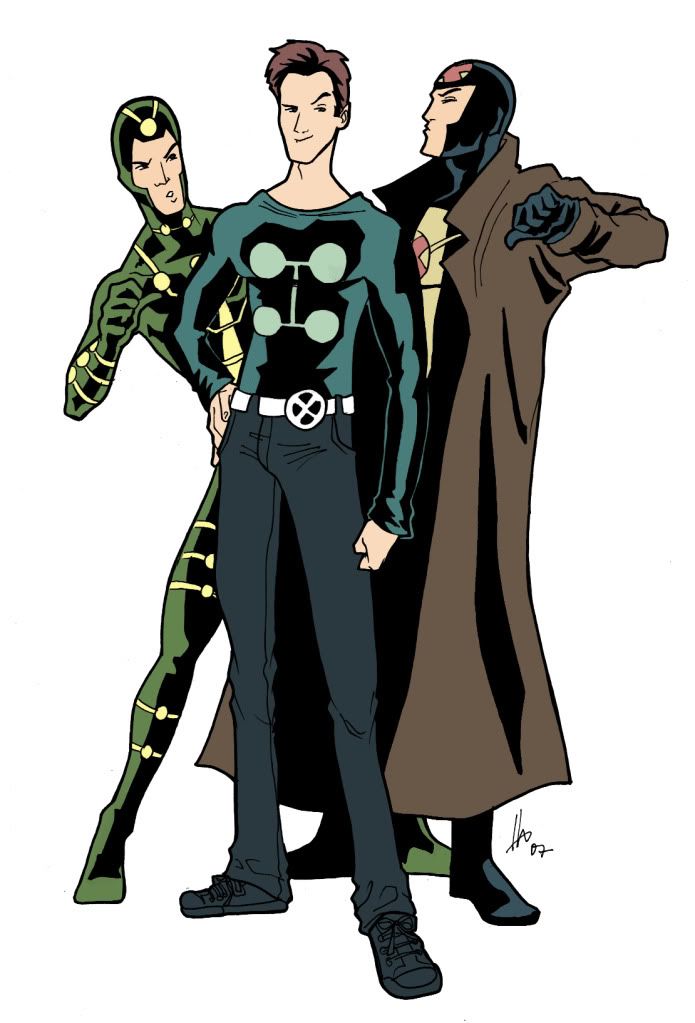
My favorite hero
Starting in October/November or so, the entire X-Men line of comics is undergoing a Regenesis. After the Schism, Cyclops and Wolverine will be splitting the X-Men down the middle. Half will stay with Cyclops in California, while half will return to New York with Wolverine. Likewise, Marvel is splitting their X-Men comics down the middle. Four titles will be on Cyclops’ side and four will be on Wolverine’s side. We’ve known for a few weeks now that X-Factor will be on Wolverine’s side. Their new Regenesis comic is scheduled to come out in January.
So why do I think Multiple Man is a dead man? Two reasons. First, here is the new teaser image released today:

Where is Multiple Man hiding?
Mutiple Man is nowhere in sight! Several characters are still in silhouette, including an obvious Strong Guy and Banshee, but many more have been revealed. Amongst them is the return of Havok, the blonde guy front and center. Havok is not a regular member of X-Factor, so his joining the team is one of the new changes as part of Regenesis. But Havok is in the leader’s spot, and Multiple Man is supposed to be the leader of the team. So there we have one very big clue.
Second, the solicitations for the November issue of X-Factor claim that one member of the team will die!
In this issue, a member of X-Factor dies.
Eep!
So someone will die in November, and Multiple Man is nowhere to be seen on the January cover. In fact, Havok has seemingly taken over Madrox’s role as leader of the team. So I think the clues are pretty strong towards Multiple Man dying. Another character on the team, Longshot, is also so far missing from the cover. And somebody’s probably standing in front of Strong Guy. So there’s still hope. But it’s not looking good.
And this sucks.
I mean, what the hell? I know it’s silly to get upset over the ‘death’ of a fictional character. But level with me here. Multiple Man is my favorite comic book character. I love reading about his adventures. I read comics for the characters. The writer of X-Factor, Peter David, plucked Madrox from obscurity a few years ago and has been writing him as a fascinating and complex protagonist for a long time now. Madrox is a star! Sure there are probably plenty of in-story reasons to kill him, but c’mon. Can’t I have my favorite character still alive? Still around to read about on a monthly basis?
Comics will just be a bit more depressing if Multiple Man is dead.
But I suppose it’s not that big of a deal. He ‘died’ once before, back in X-Factor #100. Then a few issues later he came back and just said, “Nope, I didn’t die, it was only a duplicate!” So that could always happen again. I’ll keep my hopes up that he’ll stay alive, or that PAD has some deeper plans for Madrox than just killing him off in order to write Havok instead.
On a semi-related note, they also revealed the Regenesis cover for Wolverine and the X-Men. My brother and I have agreed to split, he’ll get the Cyclops led Uncanny X-Men while I get the Wolverine book. And now I’m definitely happy with that choice because look who they’ve revealed to be on Wolverine’s team.
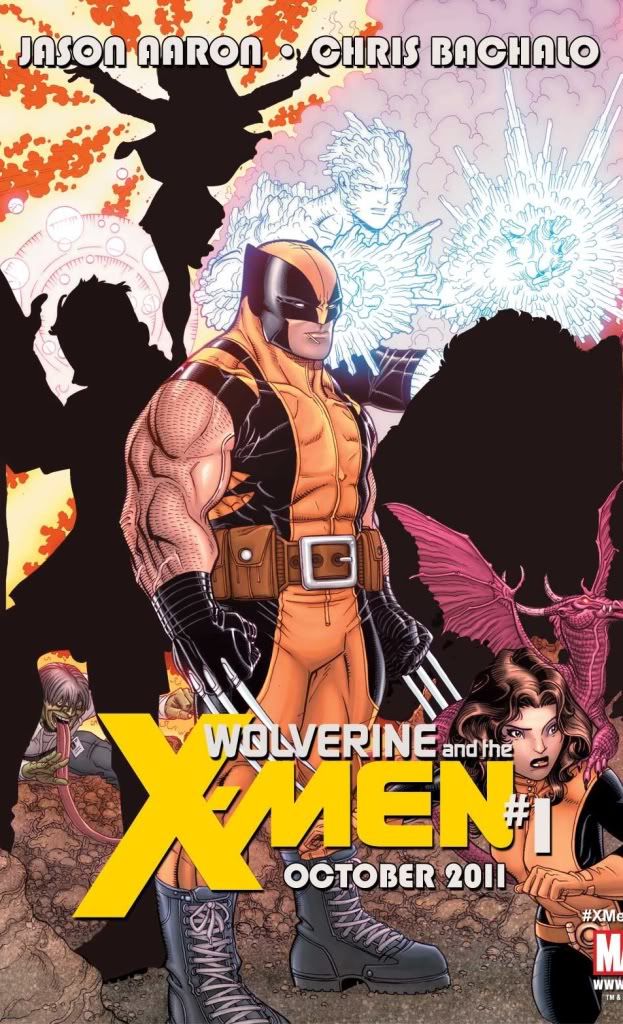
Toad is in the bottom left corner
Iceman and Toad! Two of my favorite X-characters! And Toad is supposed to be a bad guy, a member of the Brotherhood of Evil Mutants! I’ve been a fan of Toad since the X-Men movies, and he’s been simmering in the background, waiting for years now to do something awesome. This could be it! I can’t wait to see Toad take center stage!
If only it wasn’t at the cost of Multiple Man…
Review: Justice League #1
The future of comic books is here! Or at least that’s what DC Comics would like you to believe. So far, I’m not convinced.
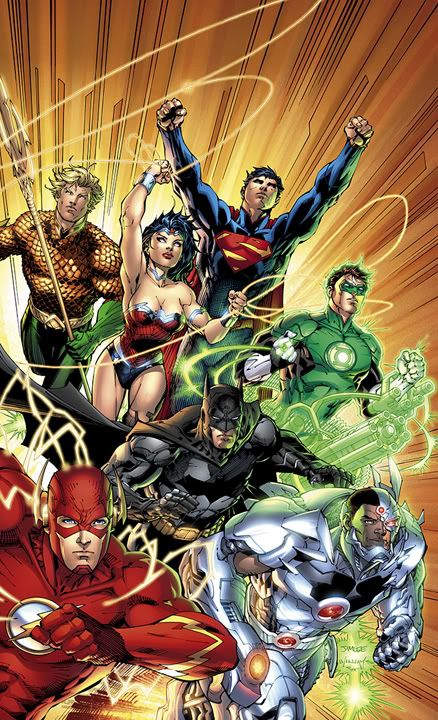
Justice League #1
Today marked the release of Justice League #1, their launching point for a whole line-wide revamp of their most popular characters. This comic has been hyped up the wazoo all Summer long. It’s reportedly had more than 200,000 orders. Justice League was the only comic book that DC put out this week (sort of) in order to ensure that every comic fan worth their collection would get in on the ground floor of their exciting and bombastic new stories!
The comic fails. Not terribly so. But this is a real stumble out of the starting gate.
Justice League #1 feels like one of those extended house ads they staple into the middle of normal comics. Where Superman and/or Green Lantern help some kids wearing Subway brand T-shirts defeat some bad guys with the power of Subway sandwiches. It looks like Green Lantern. It acts like Green Lantern. But it doesn’t feel like Green Lantern.
Instead it feels like a rushed, overly thought-out promotional piece. What’s supposed to be the iconic first meeting of Batman and Green Lantern speeds through its dialogue and its team-up, with the two of them trading not-so-snappy banter as they try and fight some random, monstrous-looking villain. But the writer, Geoff Johns, seems to think that the banter is very snappy. That’s why it feels overly thought-out.
Justice League #1 doesn’t feel new or special. It’s just another comic about Batman and Green Lantern.
At least this first issue of Justice League has some cool action, some strong characterization and some fantastic art. When I say this comic fails, I mostly mean that it fails as the kick-off to the new DC Comics Universe. I was looking forward to reading a clean, complication-free introduction to the Justice League kicking ass and taking names. What I got instead was a comic where Batman and Green Lantern hang out and trade forced dialogue about the ‘newness’ of this world. Barely anyone else appears in the comic, despite the cover featuring seven heroes. No sign of Wonder Woman, Aquaman or Flash. And Batman and Green Lantern are an odd – yet obvious – choice to introduce us to the new DC Universe.
This was not what I was expecting and I am disappointed. Though I’ll keep buying, because it looks like they’re going to try and build up to greatness instead of wowing us from the start – which is what they should have done.
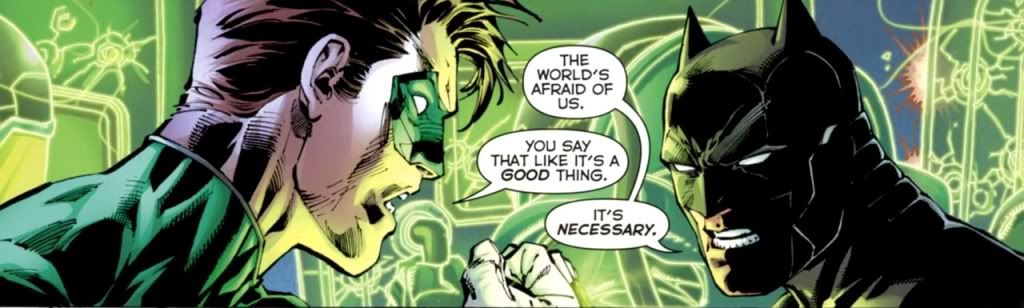
Some call it bickering, some call it bantering; I call it forced
Justice League #1 takes place towards the dawn of the superhero age, which occurred ‘5 Years Ago’ in comic book time. None of the heroes have met one another. They don’t know each other’s secret identities. So this first storyline in Justice League is going to let us tag along as they meet each other and start to work together against a greater threat. There are several scenes in this issue where the ‘newness’ of it all is thrown at us. For example, Green Lantern is shocked when he finds out that Batman is just a man in a costume and doesn’t have any bat-powers. The cops are also openly trying to shoot the heroes, placing them firmly on the opposite side of the law for now.
But for all this freshness, no one seems bothered at all that the villain suddenly transforms into a giant, mechanical, alien-looking spider monster. It’s just business as usual.
And that, I think, is my main complaint about this comic, one that is felt in both the writing and the art: this doesn’t feel new.
The costumes, powers and personalities remain the same for Batman and Green Lantern. So what if the cops are shooting at them? That’s not a big enough change. Why couldn’t this comic work as the first meeting between these heroes in the old DC Univers? There’s nothing that makes it feel like it’s this new world with new histories and background. Heck, for Batman and Green Lantern, they don’t even have new histories or background. More on that later. The heroes look and act the same as they always have. They’re fighting a similar villain to what they’ve always fought.
The art reinforces this idea.
Jim Lee is, without a doubt, one of the most popular artists in comic books. His characters are dynamic and detailed, his action scenes are exciting and he draws some pretty awesome Green Lantern ring-constructs. His Batman is one of the reasons I started reading DC comics back in college. I was reading a few Robin issues, and Batman was right in the middle of a big storyline entitled Hush, about a new villain. Jim Lee was drawing every issue for a whole year. The art was beautiful.
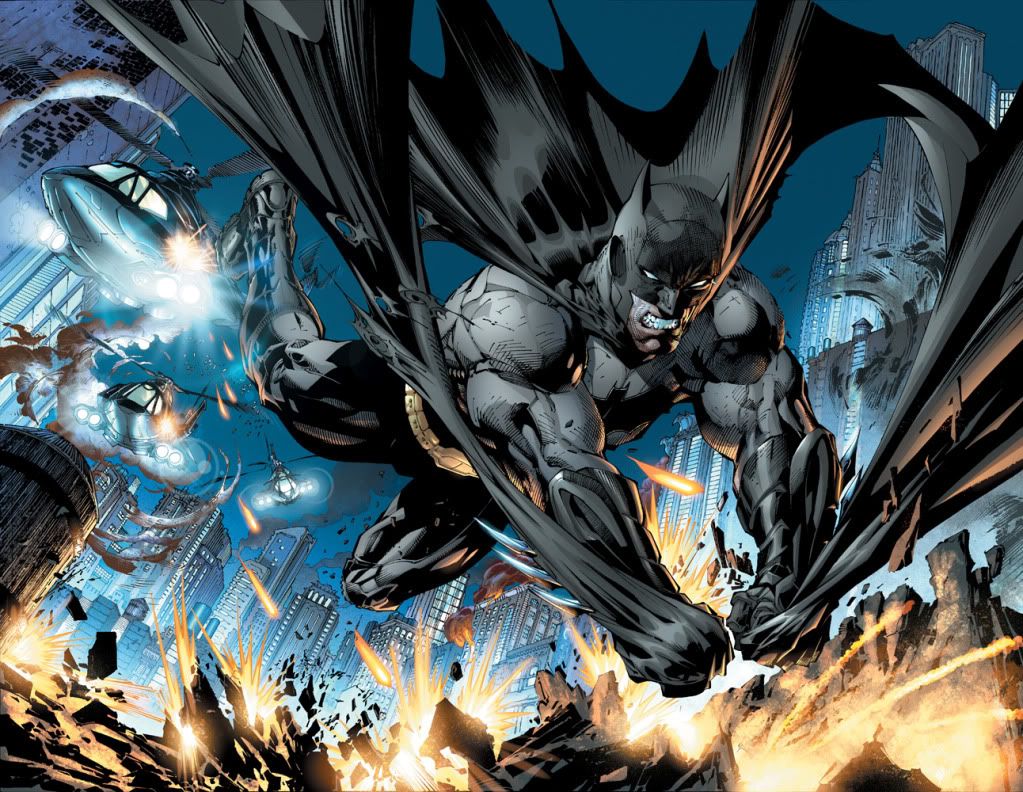
Click to enlarge - It's worth it
But that’s the problem, I’m very familiar with Jim Lee’s artwork! As are most comic book fans. So when we draws these supposedly ‘new’ versions of Batman and Green Lantern, they look just like the old versions. Of course it makes perfect sense to put your most popular artist on this very important issue, but all it does is remind us of the old stories. This issue should be making us look to the future, not have us reminiscing about the past. Minor spoiler, the cliffhanger character appears on the cover. Surprise!
So Justice League #1 fails as an introductory issue to both the team and the new DC Universe. We get a nice, if incomplete, introduction to Green Lantern and Batman, but they could very well just be the same characters from the old DC Universe. Nothing in this issue screams new or exciting.
Hopefully issue #2 can make up for some of these shortcomings. The problem is that it won’t come out until October. Between now and then, there are 51 other brand new series coming out. All those new #1 issues, surely some of them are going to be more exciting and memorable than this issue.
Which shouldn’t be the case. Nothing should be bigger or more bombastic than the Justice League. Oh well.

The eventual full lineup of the new Justice League
That’s my review of the issue, but maybe you’re interested in a little background for any readers who have no idea what I’m talking about. What’s this revamp, you ask? I’m going to assume that you have a passing knowledge of the iconic superheroes: Superman, Batman, Green Lantern, etc. They are all from DC Comics, one of the two main comic book companies. Their competitor, Marvel Comics, has Spider-Man, Captain America, and the X-Men in their stable of heroes. Both companies have been publishing comics about these heroes since at least the 60s, sometimes even longer. Batman and Superman have been around since the 30s!
But all those years of stories and all of that continuity add up! Comic fans want their heroes to learn lessons that carry over into the next issues, to grow and change. But new readers might be afraid to pick up a new comic because they think they have to know 30+ years of comic book history to understand what’s going on. Someone new to comics might not want to pick up Superman #662 because they haven’t read the 661 issues that came before.
Both publishers are aware of this problem and take steps to make comics more accessible. Well this Fall, DC Comics is taking an extreme step to make their comics more new reader friendly. They are doing a line-wide reboot of their titles, starting over with new #1 issues and stripping away all that cluttered up continuity. The characters are staying the same, for the most part. Superman will still be Superman. He just won’t have the same baggage that he’s had for the past few decades.
But DC isn’t going for a full clean slate. They’re not starting over from the ground floor. Some characters will have a few minor tweaks, some characters will be rebooted entirely, and some characters won’t change at all. Which brings us back to Batman and Green Lantern and why they are an odd -yet obvious – choice to be the stars of Justice League #1.
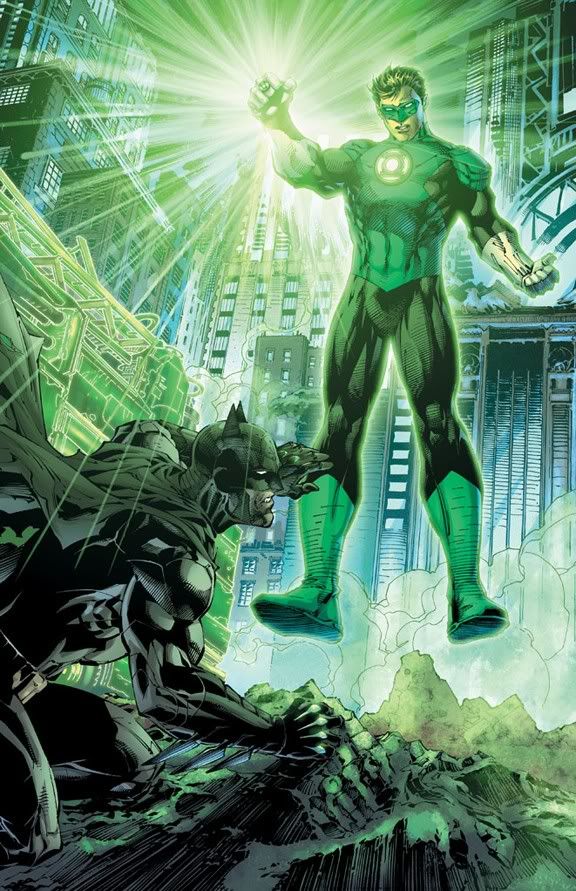
Their new 'first' meeting
In part, this reboot is due to low sales. DC has always trailed behind Marvel. DC’s two most popular comics are from the Batman and Green Lantern franchises. So it makes sense that the first issue of this reboot would star their most popular and profitable characters. However, Batman and Green Lantern have not been revamped at all. The stories and characters from before the revamp will be carrying over into the revamp. Nothing is changing. At least nothing major. So I find it odd that they will introduce us to the new DC Universe considering they will remain exactly as they were in the old DC Universe.
At least this new issue gives writer Geoff Johns a chance to flesh out their characterization.
Though their dialogue sucks and feels very forced, Green Lantern is charmingly cocky and Batman is quietly stoic. We can really get at the heart of their personalities, which should be fun as the series continues. Hal is supremely confident in his Green Lantern powers. Whereas Batman doesn’t give a shit about the fancy glowing hero, Batman just wants to get the job done. They’re both tracking a vaguely monstrous villain in Gotham City, one who works for the big bad guy, but we don’t see that super-villain yet.
To set the stage, DC’s revamp involves cramming all of their important continuity down to a 5 year span. In this new DC Universe, superheroes have only been around for five years. They’re fresh and exciting, but people aren’t sure they can trust them just yet.
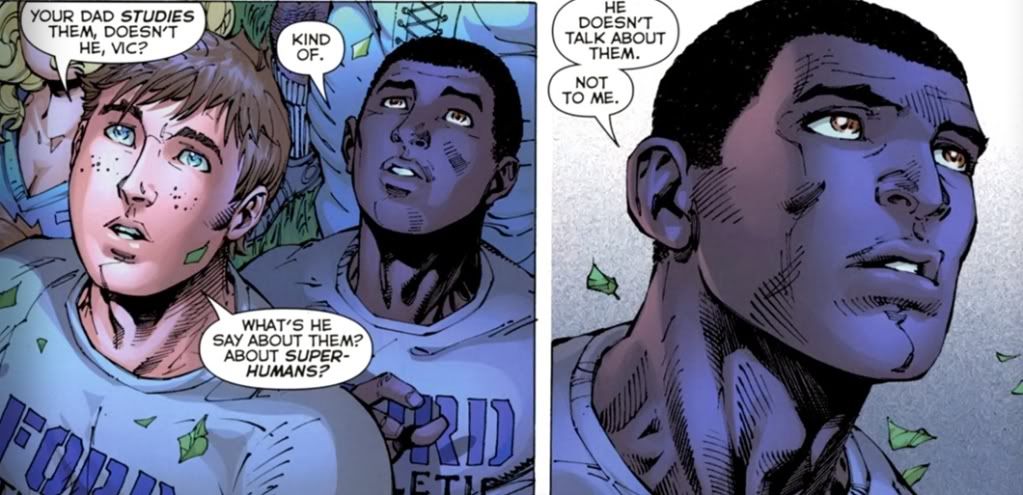
That's Cyborg on the right, but he isn't a superhero yet
It’s an interesting take on superheroes and the public. Not new, but it could be a good read with such iconic heroes. Supposedly the new Superman is going to be more alien in nature, and he won’t be the beloved hero. We’ll see how that goes.
In the end, I’m excited for the reboot but disappointed in the first issue. But DC has plenty of chances to win me back!
A Little DC Rejiggering Intro for You
This is a parody trailer for the new DC Comics reboot. It’ll help you non-comics reading fans get up to speed while I write my Justice League #1 review.
Review: Punisher #2
With the second issue of the new series, writer Greg Rucka continues his tale of the wraith-like, silent Punisher and the investigation into the wedding massacre. Once again our focus is on NYPD detectives Celmons and Bolt, split with the continuing adventures of the killer, who is being stalked by the Punisher. We get a peek at the people behind the massacre (I think), but we’re no closer to discovering why everybody at the wedding had to die. Still, the series is rich, dark and fun to read.
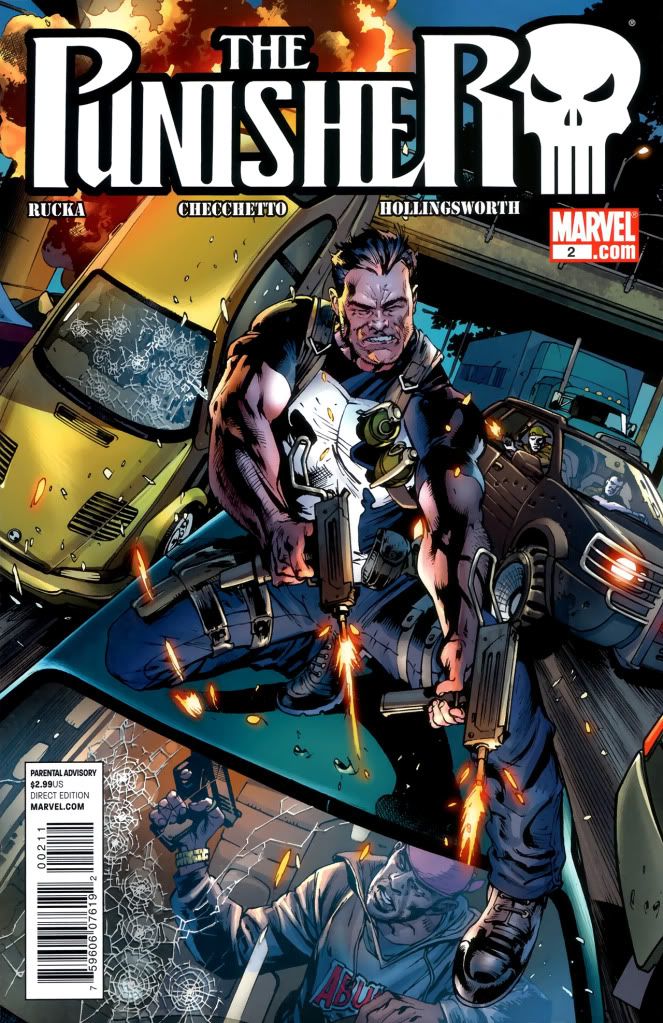
Punisher #2
Until they blow the cliffhanger with a frankly silly new addition to the story!
But more on that later. For now, let’s start with the Punisher. Once again, Rucka gives us a Frank Castle who doesn’t say a word and doesn’t have an inch of internal monologue. Though no longer as spectral, thanks to the art, he still doesn’t say anything. The Punisher goes about his killing in utter silence, and there’s a lot of killing this issue. But I’m already getting tired of the silent act. The supporting characters are good so far, at least the detectives are. But I want to read about Frank Castle, not a bunch of nobodies.
Hopefully the villain they inject into the cliffhanger will at least get the Punisher to speak next issue. If only it wasn’t such a lame villain.
We start off following the killer from the first issue, the goateed guy who gunned down people at the wedding but survived the Punisher’s club massacre at the end of issue #1. This guy is running like hell through the streets of New York, trying to go to ground. But nobody’s willing to put him up. So he just keeps running through the dark, grimy streets of New York City. We’re treated to narration by two people named Stephanie and Christian, who we see a bit later standing on a rooftop with a group of other people. They’re dressed like rich people and are talking about the killer, and how the only reason the Punisher let him live is to track him, which would lead the Punisher to Christian and Stephanie.
And sure enough, that’s exactly what Frank Castle is doing. Though still in the shadows, Punisher is now drawn in such a way that we can clearly see his face. He’s no longer a stealthy ninja, as in the first half of the first issue. You may remember that issue #1 was split into two parts. In the first part, Punisher only appeared in shadow. In the second part, he was in the light. In this issue, all one story, he’s in the light again.
Because of my love of the Garth Ennis Punisher series, in which Frank Castle was a hard man pushing 50 with a lot of years on him, I’m not a fan of this young, handsome Punisher. But it’s not a big deal.
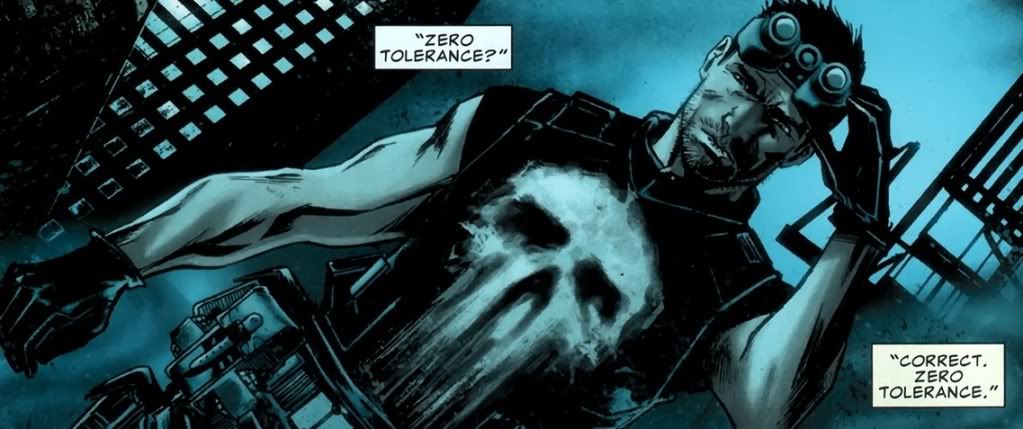
Handsome chap
Stephanie and Christian aren’t worried because they’ve hired someone to take care of the Punisher. We see this person only in shadows for now, and he has claws and glowing red eyes. Someone badass perhaps? Just you wait and see!
We jump to the daytime, with detectives Clemons and Bolt investigating the club massacre that ended the first issue. Oscar “Ozzy” Clemons is the Morgan Freeman guy, and he’s convinced that the Punisher is responsible. The kills are far too clean, far too precise. That’s Special Forces training right there. So now they’ve got the Punisher to deal with, messing up their case. They’ve got a job to do, doesn’t the Punisher understand that?
Speaking of jobs to do, in comes Norah Winters, a reporter for the Daily Bugle and a supporting character from Amazing Spider-Man. Now this was a fun cameo. One aspect of this Punisher series is that it’s firmly set in the Marvel Universe, complete with superheroes and mutants and whatnot. So it’s smart that, instead of making up some random reporter, Rucka just borrows an existing reporter character from Amazing Spider-Man. Norah’s fun and sassy in this issue, and has clearly worked with Clemons before. Unfortunately, their entire conversation is about Norah and we don’t really learn anything new about Clemons or Bolt. It’s an extended explanation into who she is and what she does. Hopefully that means she’ll be making routine appearance in this comic.
Being a newspaper reporter myself, having one as a character is always a hoot.
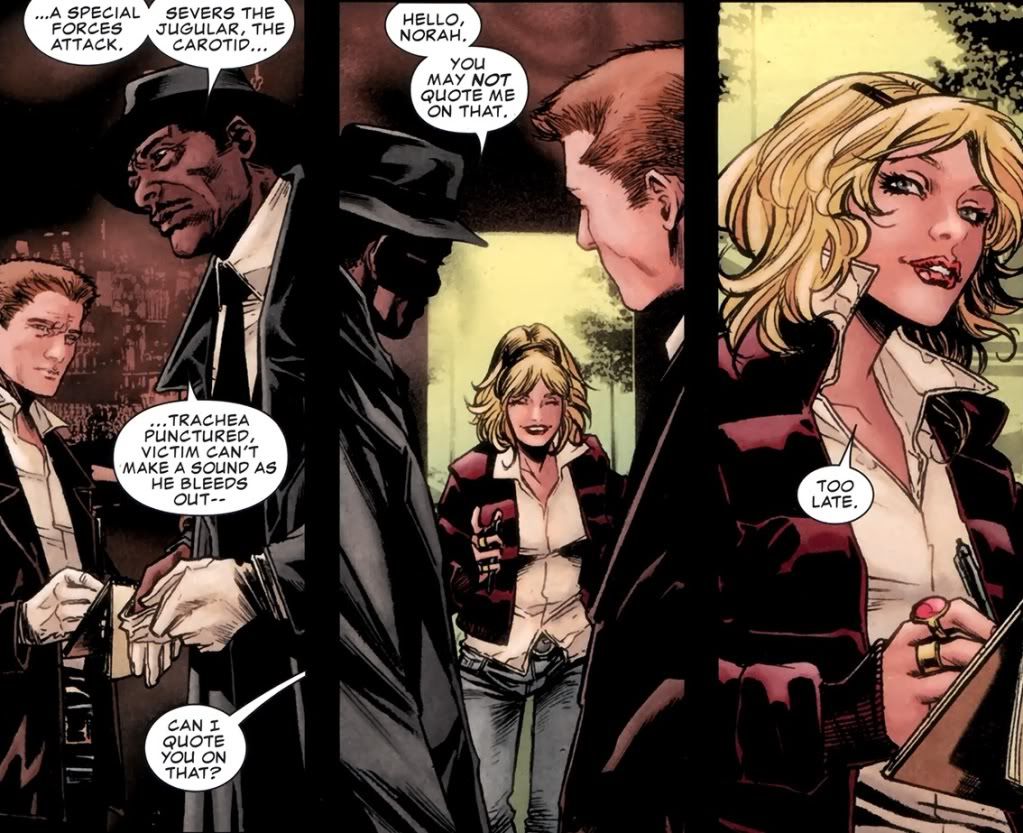
Young, perky and blonde; what's not to love?
Let’s stop here for a moment and look at that picture I just posted. This is a pet peeve that’s only going to bother someone like me, who is a crime reporter for a newspaper in real life. Just like most jobs, Hollywood and other media tend to exaggerate a reporter’s job. I realize that Norah is supposed to be a sassy and edgy reporter, but she’s all over the place in this issue. I realize she may just be joking with her friend Clemons, but when a homicide detective tells you that you can’t quote him on the details of a murder investigation, you don’t quote him on the details of a murder investigation. You have to maintain sources as a reporter, and to do that you have to maintain their respect. If they tell you something ‘off the record’ and tell you not to quote them, you don’t do it. That tends to piss them off. Bad enough she snuck past the police tape into an active crime scene.
Honestly though, I’m probably just being silly. It’s comics, not real life. And my dinky little city isn’t New York City, so maybe it’s different there. Still, it’s one of those things that will only make someone in my specific circumstance stop and shake his head.
This scene is awesome, though, because it name drops Phil Urich. Longtime readers of my blog will know that Phil Urich was one of My 6 Favorite Comic Book Characters. His current comics status quo is that he’s a cameraman for the Daily Bugle, who is making some cash and fame by filming himself as the villainous Hobgoblin and selling it to the Daily Bugle. Exactly like Peter Parker did when he took pictures of Spider-Man. So it’s awesome that Phil gets a mention in a Punisher comic. It means Marvel is really pushing him as a character that will stick around. What’s silly, though, is that Phil is being treated like a TV cameraman. They say that Phil is filming Norah doing her reports. I know the Daily Bugle is mostly an online newspaper now in comics, but do they really do more video than newspaper reporting? Norah can easily make the leap from anchorperson to writing reporter? Those are two rather different fields, especially when it’s clear that Norah prefers the writing.
Kind of an odd sort of crossing of wires in terms of what the Daily Bugle is doing these days. Still, woot Phil Urich!
But I digress. Back to the Punisher!
After the extended introduction to Norah, we jump back to the Punisher chasing the goateed killer. His name is Liam, by the way, and he’s found a brothel to hide in. The owner kicks him out on the street, tossing him into the gutter. Oops! Punisher’s right there, right outside! Liam scrambles to his feet and keeps running, while the Punisher decides to pay the brothel a visit. In silent fashion, Punisher lets himself in and starts blowing away the druggies and the gang-bangers – but he doesn’t harm the girls. Punisher doesn’t kill prostitutes, especially ones that are hooked on drugs like these girls. But he does kill the owner, even when the guy tried to take a hostage, and he kills the ‘madame’, who was using drugs to keep the girls in line.
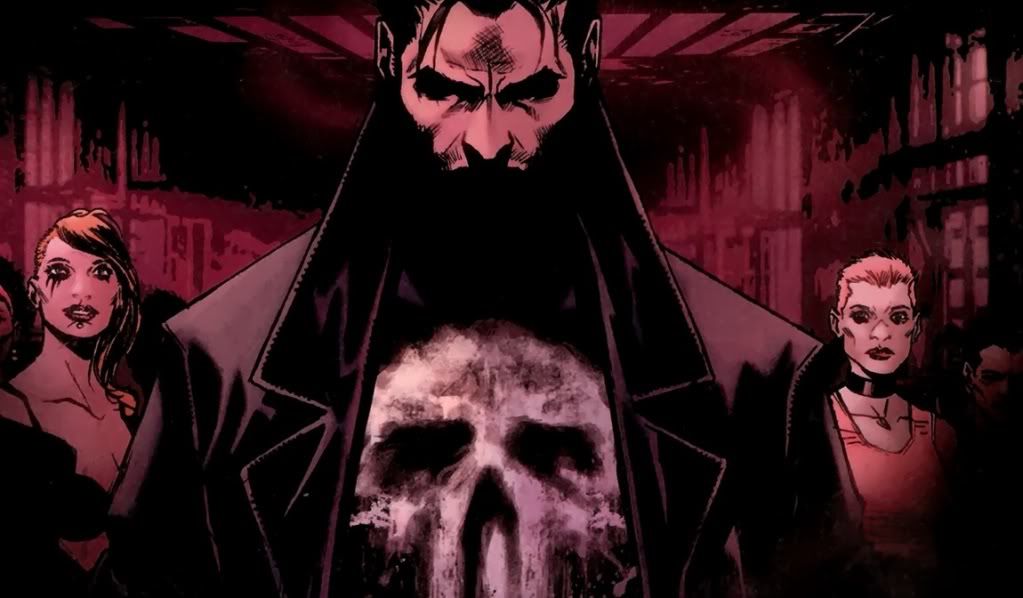
The blood will wash right out, the punishment will last forever!
The art in this scene is clear and easy to follow, if a little scattershot. The panels are not square and gridlike, with a few experimental angles. What works great are the colors. The scenes on the street with Liam are blue and black, while inside the brothel we switch to a fuchsia. The rooms are bathed in fuchsia, and soon blood. The Punisher’s kills are sharp and bloody. One is especially cool when they just show the silhouette of the owner (in fuchsia, not black) and he’s got the detailed, bloody bullet hole in his head. Punisher leaves and the drugged out girls in the brothel are free. I guess.
We jump back to Clemons and Bolt, who have gone to visit the bride in the hospital. She’s practically the only survivor of the wedding massacre, and she’s finally woken up. It’s a quiet, soft scene in which she tries to remember what happened. Then she remembers everything…

A brilliantly silent page
In the end, Liam has made it back to his bosses, though not Christian and Stephanie from earlier, just some other people who were working with Christian and Stephanie. One of them is a pretty redhead named Dove. She kills Liam with a shotgun, and the Punisher watches from afar through the scope of his sniper rifle. Once Liam is dead, Dove turns to look up Punisher’s scope to tell him that she knows he’s there and she’s ready for him.
Enter cliffhanger villain…the new Vulture!

Are you KIDDING ME!??
What is this crap!? This character is a guy named Jimmy Natale, who used to be a mafia ‘cleaner’. But then the mob turned him into a murderous bird monster-man who now wants to get his revenge on mobsters, or something. Sometimes he works for the bad guys. He fought Spider-Man a few times as some kind of vicious freak. He has no connection to the classic Vulture though, nor to the Punisher. He’s just some monstrous new take on the classic villain created during the period when Marvel wanted to give Spider-Man some new villains to fight. But the point I’m trying to make is that this is the lamest, one-note, bottom-dwelling super-villain that they could possibly throw at the Punisher. They build up this hidden, surprise super-villain…and it’s the new Vulture?
What a chump!
I can only hope they needed to find some bargain bin super-villain for the Punisher to kill. For you see, that’s the problem with bringing the Punisher into the normal Marvel Universe. If you want to have him go up against costumed super-villains, he’s going to want to kill those super-villains. That’s why Garth Ennis’ Punisher took place in its own separate world. And why when they brought Punisher back to the Marvel Universe during Civil War, he almost immediately killed Stilt-Man.
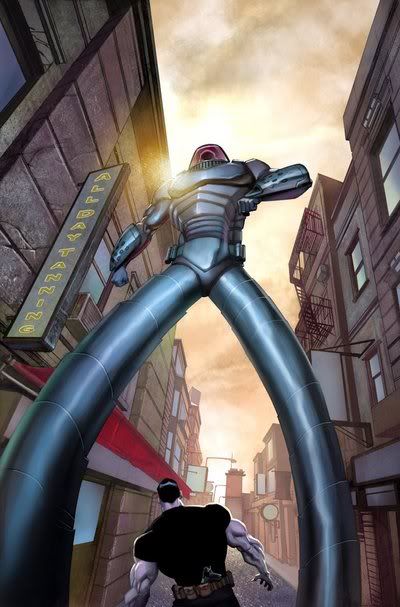
R.I.P.
So I guess Marvel’s just throwing out some lame super-villain who, in theory, will be able to put up a fight. The character of the new Vulture is that he’s vicious and monstrous. So it could very well be a brutal battle in issue #3. I’m sure he’ll definitely give the human Frank Castle some problems. He’s just a laaaaaame villain.
All-in-all, it’s a good second issue. The story continues along on both fronts, though not very far, I’m afraid. We meet the bride who survived, and we meet the people who were behind Liam and the killers. So the story is moving. Unfortunately, we don’t get to really know anything more about the protagonists. Punisher remains silent, ‘speaking’ only with his guns. He kills and moves on, as the Punisher does. He continues to be badass, but this silent treatment isn’t going to be as much fun if it continues much longer. Detectives Clemons and Bolt are back, but their character development is brushed aside so that we can be introduced to Norah Winters.
While it’ll be fun to have Norah in the book, if she sticks around, we didn’t really get to know anything more about the two detectives, who we know will be the main protagonists. Bolt, especially, was in the background this issue, while he was the main character in the last issue. So while the story may have progressed, the characters did not.
At least the art was once again phenomenal. The right mix of action and gritty, street-level talking heads. I love realistic art in my comics, as opposed to silly superhero fantasy, so I’m enjoying the art. This is definitely a book to keep reading. I’m going to try to keep going with every issue, since I’ve had the luxury of starting with issue #1.
What do you all think? Should I keep reviewing the Punisher?

 Henchman-4-Hire