Review: Assassin’s Creed 3
Welcome to the end of Assassin’s Creed Week here at Henchman-4-Hire! I hope you’ve enjoyed yourselves. Maybe I’ll be able to think up some new theme weeks to come. I apologize for the lateness of this review. Assassin’s Creed 3 came out at the end of October, but I wanted to wait to get the PC version when it came out later because my computer has better graphics than my standard definition TV. And this is a game that demands the best graphics. I also had to beat the darn thing, and that took a good chunk of time. Day jobs tend to get in the way of wanting to play video games all day long. But here we are, Assassin’s Creed 3, probably my most anticipated game of this year – and it more than lived up to the hype and excitement! This is one hell of a game and a damn fine expansion on the series as a whole.
Boasting what has to be one of the single greatest game worlds and atmosphere in all of gaming, Assassin’s Creed 3 has an awesome main story, oodles of side projects and definitely improves on all of the best aspects of the series.
Game rating: 5/5: Great!
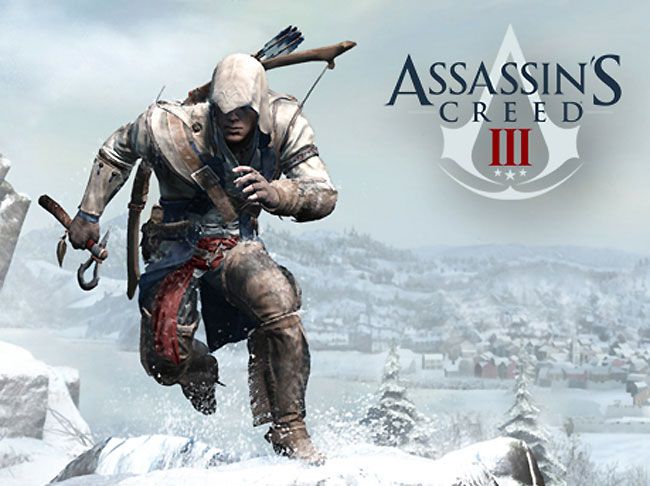
That’s not to say the game isn’t without flaws, and it has more than a few, mostly to do with the side missions and projects. The main storyline is great, with some surprising twists and some very well-done character development. Connor is a fun, though sometimes stiff, protagonist, and his enemies are some of the most well-defined in the entire series. I loved killing the Borgias in Rome as much as the next guy, but the Templars get some real character development in this game, some of it very entertaining. The best parts of the game are still the parts that define the Assassin’s Creed series: dizzying parkour and smooth, vibrant slaughter. Assassinations are still incredibly fulfilling (when I can get them right), and fighting feels just a bit more fun, with more animations and variety. And the ways in which the developers have upgraded the parkour to include trees and wilderness will astound you. So much fun!
And believe me, we’ll be talking about the naval missions. They’re a whole new great game in and of themselves.
The weakest link in Assassin’s Creed 3 are the Desmond Miles missions set in the present day. While some of the missions involve some truly spectacular visual achievements, Desmond has never felt so worthless. And he’s supposed to be saving the world, for cryin’ out loud! And sure enough, Desmond gets one clunker of an ending. So it’s a good thing Connor can shoulder the weight of the entire game.
Join me after the jump for the rest of the review!
Deep down,I think everybody is a history buff. Because there have been some truly fascinating events in the history of the world. And that is where the Assassin’s Creed series excels. Rather than come up with some original idea or setting, they take these fantastic gameplay mechanics and plop them right in the middle of some truly grand historical arenas. But while dabbling in the Crusades and the Renaissance were fun in the first two games, Assassin’s Creed 3 is set in a time near and dear to my patriotic heart: the American Revolution! Finally, a slice of history I was actually eager to get to know more about. Because along with including historical people, places and events, the Assassin’s Creed games also feature an in-game database of encyclopedia entries about everything you encounter. I could have done without the snarky British commentary, but it was still fun to learn more about the American Revolution while playing this game.
Especially considering I haven’t had a proper history class on the subject since high school.
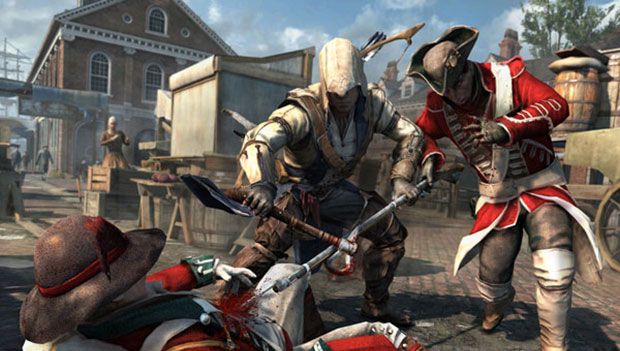
The Redcoats used their muskets like swords, right?
The bulk of the game takes place in Colonial America, following the adventures of the assassin Connor. There is a main storyline to follow, with Connor aiding in the Revolution while assassinating his enemies the Templars. There are also a real plethora of side missions and quests, but we’ll talk about those later. The main game is fantastic, with Connor killing and racing through the Colonial era in pursuit of his goals. I’ll get to the story in a minute. But the gameplay is top notch. You take on entire armies of Redcoats in smooth, flowing, easy-to-control combat that can be very rewarding when you do it right. And most of the high profile assassinations involve a lot of footwork, a lot of stealth and a lot of preparation, putting Connor in the exact right spot under the exact right circumstances to make the perfect kill. Though I’ll be the first to admit that I failed a lot of these challenges and often found myself simply chasing my foes down the street before stabbing them in front of everybody. Fortunately, you can always replay these quests until you get it right if you want.
Seriously, the gameplay is the best it’s ever been. The fighting is fun and, as I’ve said, the parkour is simply amazing.
In Assassin’s Creed 3, we visit Boston, New York City and a large expanse of wilderness in between. And while the cities are nice, and filled with all manner of historical fun, it’s the wilderness that truly stands out. If you thought it was fun to run and jump across rooftops, just wait until you do it in the treetops. The developers have created a massive forest of trees, mountains, lacks, cliffs, rocky outcroppings and much more, and have improved the parkour dynamics to better fit this neat new setting. Watching your character run, swing and practically dance his way through the tree tops and across tree branches is one of the most fun parts of the game, making full use of the new wilderness setting. And while it’s true you can’t run and climb on just any tree in the forest, the developers have created enough random paths and climbable areas so that it doesn’t feel rote. You can watch a video if it here.
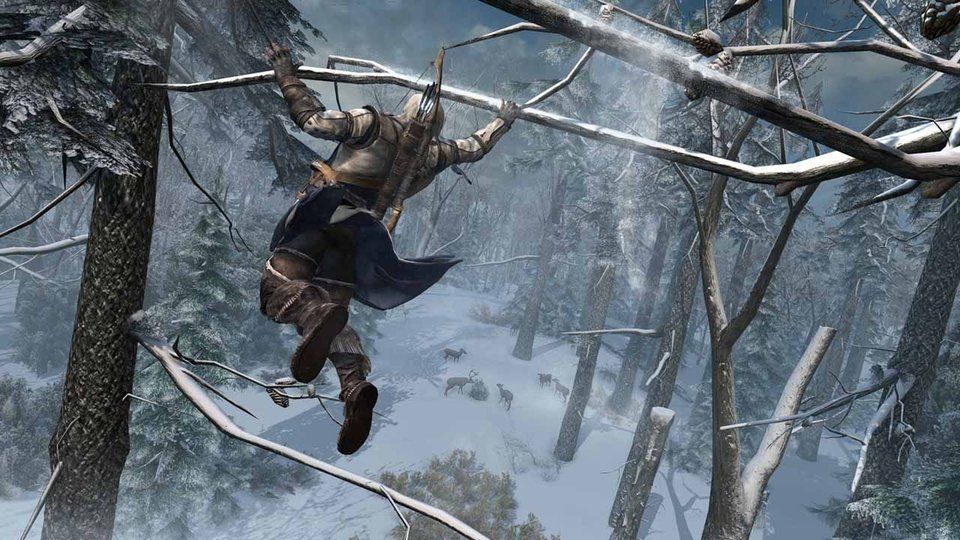
Kind of like a New England Tarzan
The story of Assassin’s Creed is actually very complex. Needlessly complex, if you ask me. The games are primarily about a group stealthy, badass assassins from different time periods, but developers Ubisoft cram a whole lot of insane story above and beyond these basic plots. I’ll try to keep it brief.
The Assassin’s Creed series is all about an ancient battle between two secret societies: the Templars, who want to control the world through order, and the Assassins, who support freedom and free will, and strike at the Templars from the shadows. The two groups have been battling one another for centuries, and each game stars a new assassin in a new time period opposing the Templars. In the first game, we had Altair in Jerusalem during the Crusades. In the second game and its spin-offs, we had Ezio in Rome during the Renaissance, and then later Constantinople. And in Assassin’s Creed 3, we have Connor in the American Revolution. One would think that would be enough.
But nope. Bookending all of these games and tying them together is the story of modern day assassin Desmond Miles. The Templars and the Assassins are still at war in 2012, only now they have this machine that allows people to view and relive the lives of their ancestors. And Desmond just so happens to be descended from Altair, Ezio and Connor. So they plug him in to this machine, called the Animus, and that’s how we visit these time periods. It’s as if Ubisoft didn’t think they could just set their games in these time periods. I would have been totally fine with that.
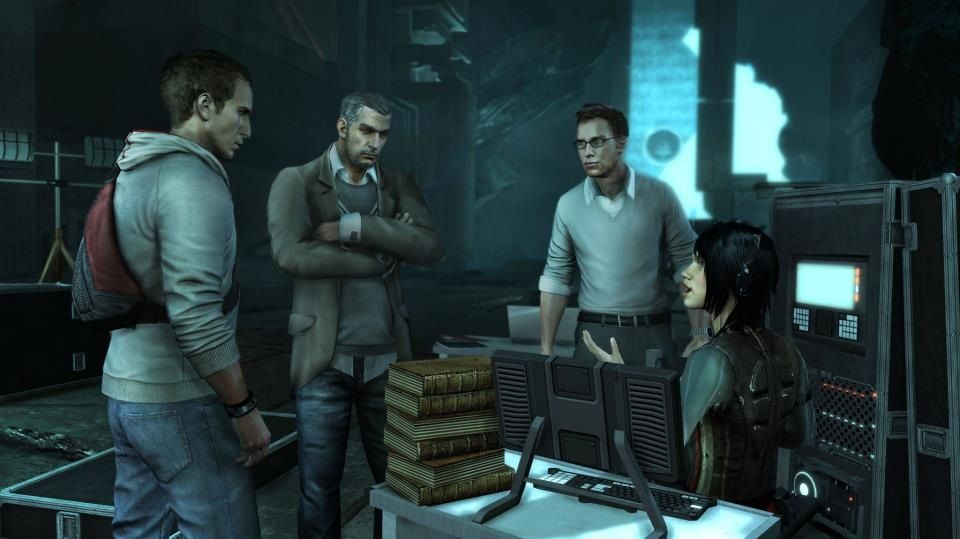
Because every game needs more stuffy white people standing around
The Templars are using this machine on Desmond because his ancestors had possession of some powerful ancient relics, and the Templars want to use those relics to take over the world. The Assassins want to use those relics to save the world. I’m going to skip over some of the more insane ideas Ubisoft has about the origins of the world and the birth of the human race. Suffice to say, interspersed with all the adventures of Connor in Colonial America, we have a few cut scenes and missions starring Desmond in 2012. They’re nowhere near as fun and exciting as the Connor segments of the game, and Desmond’s overall story is kind of confusing and disappointing, especially in a very bogus ending. (Seriously, all these games about Desmond and this is the ending we get!?).
Fortunately, Desmond isn’t a total waste. He’s got the same fighting and parkour skills as his ancestors, and his missions take us to some truly spectacular modern day settings. One mission has him scaling the outside of a skyscraper in New York City, with a gloriously expansive view. Another has him infiltrating an Ultimate Fighting arena in Brazil, where at one point you have to sneak across the light fixtures in the ceiling high above the arena. Like I said, the graphics are superb.
But while some of these Desmond missions might be fun, Assassin’s Creed 3 is definitely Connor’s game.
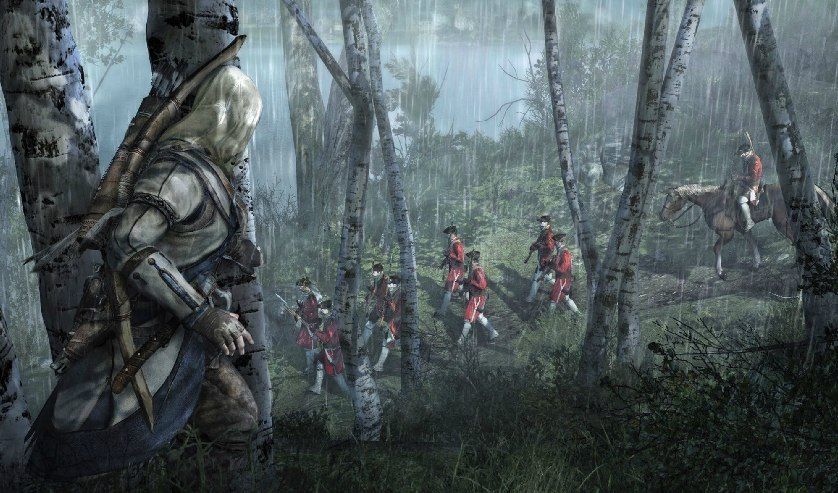
And gaming is good
Though if I’m being truly honest, it’s not just Connor’s game. Assassin’s Creed 3 actually starts out with Connor’s dad, an Englishman named Hatham Kenway. The first few hours of the game are all about Kenway traveling to America (with a few great missions on his ship crossing the Atlantic), and then recruiting a team comprised of actual historical figures, like Benjamin Church, Thomas Hickey and Charles Lee. I love how the game incorporates some real people in these games, building its storyline out of actual historical events. For example, you get to prevent Hickey’s attempted assassination of George Washington! But I’m getting ahead of myself. So Kenway puts his team together, and then the game hits you with a rather awesome twist.
Kenway is actually a Templar, and he’s been recruiting the first Templar Order in America. So you start out the game playing the bad guys. Pretty cool twist, I thought.
During his adventures, Kenway falls for a Native American woman, and they have a son named Ratonhnhake:ton (later renamed Connor). He grows up in his mother’s village, but has a vision quest when he comes of age that leads him to a retired Assassin named Achilles Davenport. It seems Achilles is the last living Assassin in America after Kenway’s Templars destroyed the Order some time ago. I thought this was a real missed opportunity for the game. While we were playing as Kenway, we should have played that mission that ended the Assassins. We should have met the younger Achilles and seen what he was like when he was an Assassin. Either way, Achilles takes Connor under his wing and trains him as an Assassin. And finally, at long last, Connor gets to don the familiar white robes of the Assassin Order and the game can finally begin.
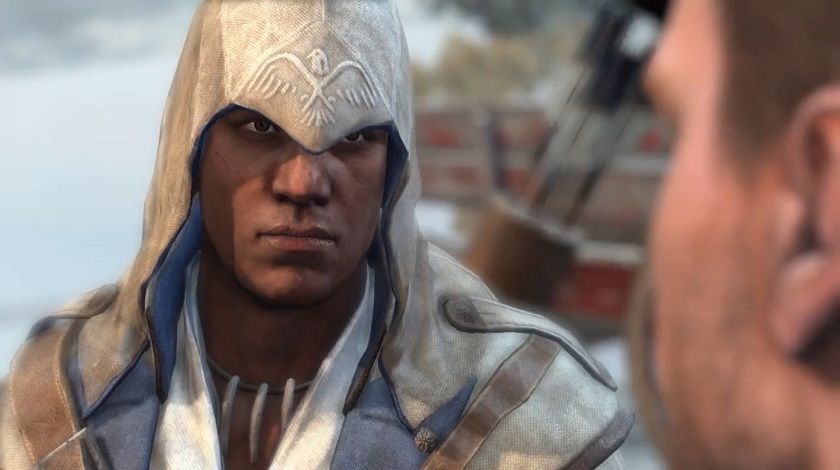
If only we all had such snappy hoods
Seriously, it’s many long hours before Connor is actually an Assassin. The wait can be tedious, but at least its mostly fun.
Connor’s story is fairly straight forward. He has to hunt down and kill all of the Templars you just recruited as Kenway, all while being set in the American Revolution. So you take part in the Boston Massacre, the battles at Lexington and Concord and the Midnight Ride of Paul Revere. You meet with George Washington at Valley Forge and you aid the French in the Battle of Chesapeake Bay. It’s all very exciting. And in the meantime, you get to assassinate the various historical Templars, while dealing with the fact that neither the British or the Colonials have the best intentions for your Native American village. There’s one particularly awesome scene where Connor chews out George Washington.
And there are several fun missions where you actually team up with your father, Kenway, even though he’s a Templar. The back and forth between Connor and his father is actually very entertaining and helps to flesh Kenway out as a character. In previous games, the Templars were pure villains with few redeeming qualities. For a time in Assassin’s Creed 3, Connor even wonders if his father can be saved.
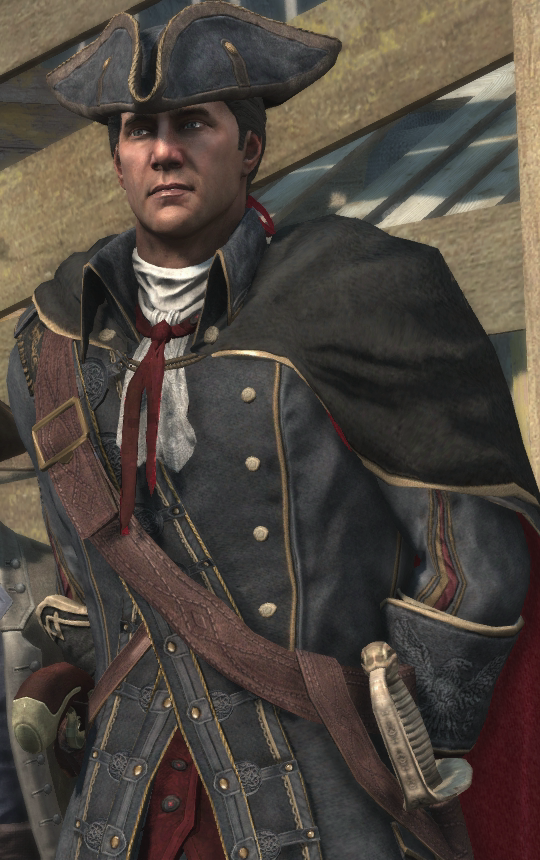
He can’t. You kill him.
So there you have the main story and the main game, but like other Assassin’s Creed games, Assassin’s Creed 3 has a whole host of other things for you to do. You can build up your Homestead into a thriving community. You can recruit Colonials to become new Assassins. You can hunt for different animals in the wilderness and collect their furs. You can search for feathers in the treetops. You can engage in a naval-based subplot. You can build up a whole manufacturing/trading empire in order to buy new weapons and costumes if you want. But here’s the thing about all of these side projects:
None of them matter.
It took me awhile to realize this, but none of these extras have any impact on the main storyline. None. At all. That’s kind of disappointing.
The main story never comes to your Homestead, its citizens are never in jeopardy from the Templars. Only one of your Assassin recruits ever plays a part in the main story, but only as a supporting character. I never used the specialized skills of my recruits in the main game, and their side missions to free other states from Templar control amount to nothing. The crafting/trading system is a bit cumbersome, but money is hardly necessary. I never wanted to buy any new outfits for Connor, and I rarely upgraded his weaponry beyond the items that were provided to me in game. The ship upgrades are pricey, and I’m sure they were helpful in the few main story naval missions, but I bet I could have beat those missions without the upgrades. And all that hunting is really only used to bolster the crafting/trading system. So honestly, all of this stuff was superfluous.
But it sure was a blast to play!
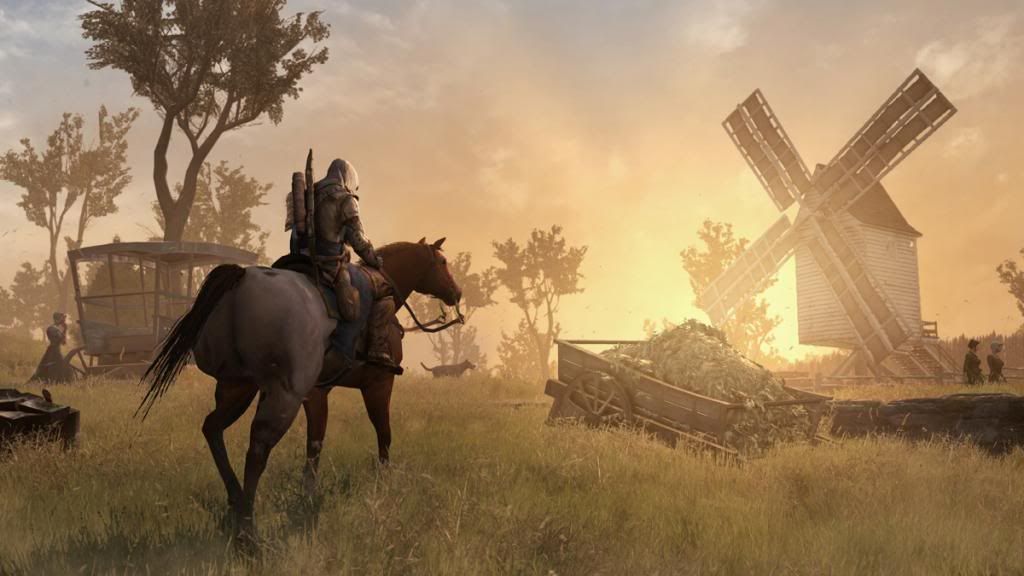
It can’t just be about the killing, it just can’t
I’m not one of those gamers who needs to get 100% completion to be happy. But I am one of those gamers who likes a little empire-building on the side. Chalk it up to all those years in my youth playing Sim Farm and the early Warcraft games. So while it’s fun playing Connor’s main story. It’s also fun playing the various Homestead side missions, where you meet different folk and invite them to come live on your land and build a community. You meet some lumberjacks, a seamstress, some farmers, a priest and many more, and these people become your extended family. You keep doing quests for them, building their artisan skills and learning more about their lives. The farmers have a baby. You help the miner woo the hunter and eventually attend their wedding. And they’re all there for you in a rather elegant epilogue for Connor at the end of the game. None of these people have anything to add to the main story, but it was still a lot of fun to meet them.
The Assassin recruits are both better and worse than in previous games. In the Assassin’s Creed 2 spin-off games, they introduced a recruitment feature, where you brought in random citizens to become new Assassins. They could then help you fight, and you could send them out into the greater world to do missions off-screen in far away countries. That has returned, and I still enjoy it. But one of the things they’ve taken away is the ability to customize your recruits, controlling their uniforms and weaponry. I missed that.
But that customization is sacrificed in order to make the recruits more personal. Whereas before, you recruited randomly generated citizens with randomly generated names, this time you recruit six specific assassins with specific skills. And when you call up them to aid you in the game, you can easily recognize who they are. It adds to their importance and a feeling of teamwork. And it helps that these recruits can’t die, instead they only go on the injured list and are out of play for a few minutes. I found that much more endearing than the old games, where your recruits could die and you had to start again with brand new randomly generated civilians.
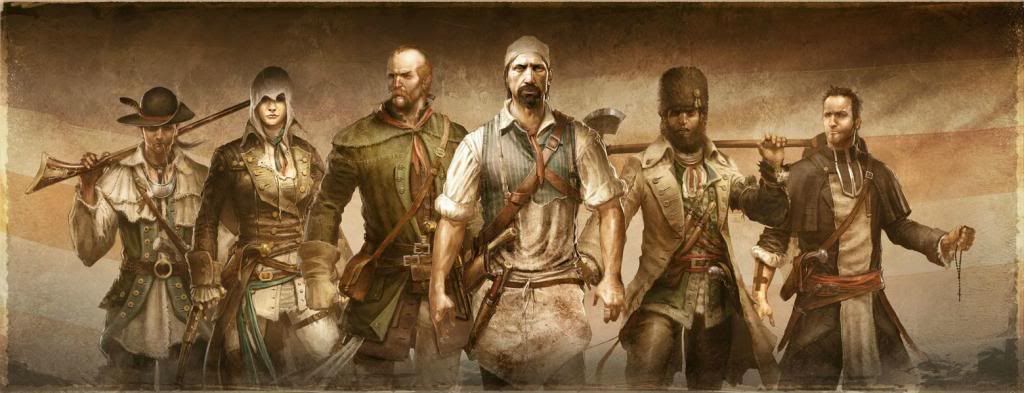
A motley crew of ass kickers
One thing I think Ubisoft should have done was combine the Homestead people with the Assassin’s recruits. None of your new neighbors become Assassins, and none of your recruits move in with you on the Homestead. The crossover between the two should have been a no-brainer. Instead, the recruits all stand in place in either Boston or New York City, and you can go visit them to have a pointless chat if you want. If they had some personal missions, we could get to know and love them as much as we do the Homesteaders. Plus it just would have been cool to know that the farmer down the road or the hunter in the trees were also your badass Assassin recruits, ready to strike at a moment’s notice.
It’s also disappointing that the off-screen missions to the rest of the Colonies don’t amount to much. Especially since both Benedict Arnold and the Swamp Fox are reduced to mere mentions in these recruit missions, rather than being actual characters in the main game. How could they pass up Benedict freakin’ Arnold?
This makes me think of another problem. Didn’t the Americans win the revolution because they relied on guerilla tactics against the formal British style? I thought for sure that Connor’s Assassin training would be perfect for teaching the Colonists how to fight from the trees and bushes. Oh well. Just another missed opportunity.
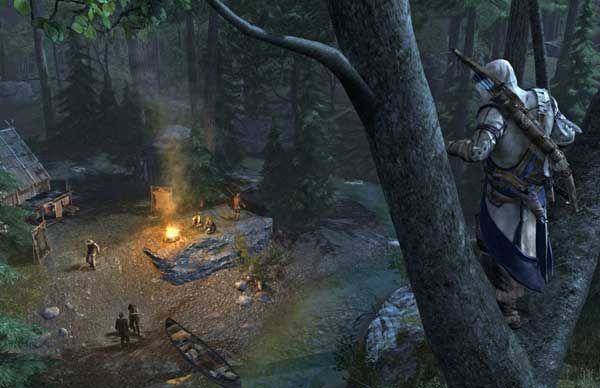
How revolutions are won
I found hunting to be particularly fun, though far more complicated than it ever needed to be. In the beginning of Connor’s story, there’s an intricate hunting tutorial. You learn to track animals by the clues they leave in the woods. You’re taught to wait in the bushes and use bait to lure deer to you, then kill them when they’re close. And you’re given snares to trap rabbits. All complex; all unnecessary. I killed more than enough animals just by running up to them and stabbing them with my knife. Not to mention the idea of leaving snares and then being able to remember where they are later just sounds way too time consuming for just a few rabbit pelts. So while hunting was a fun addition, it was really too complex for its own good.
One new addition to the franchise that exceeds expectations is the naval campaign. I thought this would be real cumbersome when I first heard about it, but sailing your war ship is a far more direct and exciting experience than I thought. And the graphics, of course, are stunning. You play entirely from behind the wheel as Connor steers his ship through the oceans and rocky bays. He has to call for more or less sails, and use the winds and the waves to position his cannons into firing range. It’s a great game in and of itself, with plenty of extra missions to do on the side beyond just the main story naval battles. These are definitely not to be skipped.
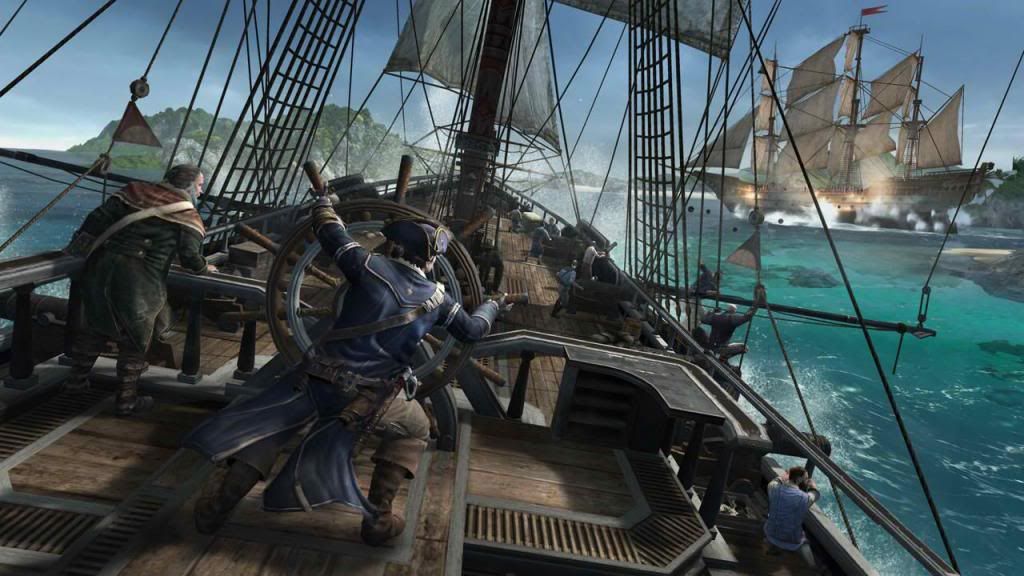
Might as well called the game ‘Naval Combat Simulator’
And that, I think, is why there are so many of these superfluous side projects: the main storyline is so specific and so tense that sometimes you don’t really get to enjoy just experiencing the game. It’s like when people play Grand Theft Auto and ignore the story in favor of causing crazy amounts of chaos in Liberty City. Sometimes you just want to be able to go freerunning in the forest or killing Redcoats without an objective or time limit hanging over your head. So Ubisoft gives players a ton of smaller, less important missions and activities to let you fully experience and enjoy the various gameplay mechanics. The naval battles are so good that it would be a crying shame if you only ever got to play the two or three that show up in the main story. So the game gave us a dozen more to play just for the fun of it. Running across rooftops and assassinating targets in the main story is usually very specific, and often with a time limit and a certain set of conditions you have to follow. So the game also gives us a bunch of optional assassinations that we can commit however we want, with as much time as we want.
That’s awfully nice of them.
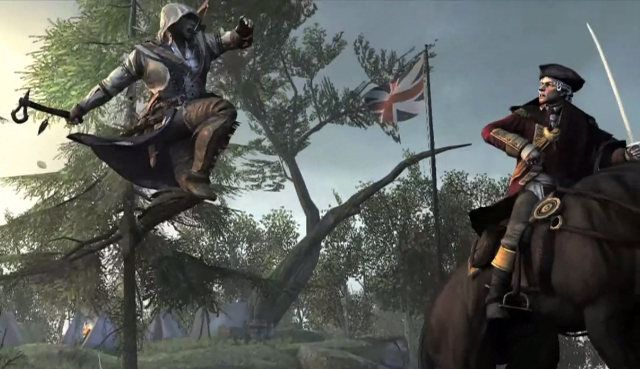
So much killing
And such is the greatness of Assassin’s Creed 3. It’s a stunning addition to the franchise, set in a very vibrant game world with history that a modern American male like myself is actually interested in learning. Butting heads with George Washington was a real treat. The main storyline is fantastic and, thanks to the American-ness of it, a lot more memorable than the previous games. I actually knew some of the history taking place this time. Connor was a fitting protagonist, and his encounters with the Templars, especially the team-ups with his father, were very well done. I especially liked Connor’s ending in the game, much better than the weirdness of Desmond’s story. And if you really enjoy the gameplay of Assassin’s Creed, Ubisoft has given us hours upon hours of extra projects and plots to play with.
And with a game this awesome, who wouldn’t want more? I can only hope Assassin’s Creed 3 gets a few of its own spin-off titles.

Posted on December 14, 2012, in Reviews, Video Games and tagged Assassin's Creed, Assassin's Creed 3. Bookmark the permalink. 11 Comments.

 Henchman-4-Hire
Reblogged this on Parrot Reviews.
So what happens to Desmond?! You keep saying it stinks, but you never tell us what happens!
Because I didn’t want to spoil. But I suppose it would be safe to do so in the comments here. Basically, the big mythology of Assassin’s Creed is that there existed an early civilization before man, one of godlike beings who lived a godlike existence and eventually created man. But their society was destroyed and two humans (Adam and Eve) escaped and started the next civilization. The ‘ancient relics’ I keep mentioning are artifacts from this first civilization, and they hold great, magical power.
Some of the gods are still alive in some kind of ghostly, spectral form, and they usually appear at the end of the previous Assassin’s Creed games to give some kind of warning about the end of the world on Dec. 21, 2012. So Desmond and the Assassin’s are usually working to gather the artifacts to help save the world.
In Assassin’s Creed 3, Desmond and his team have found an old first civilization temple, and they’re working to power it up because they hope it has some secret about saving the world. All of Desmond’s missions are spent collecting a new power source to plug into various outlets. And you spend time with Juno, one of these ancient gods, who tell you of the various failed attempts the first civilization tried to save themselves and the world.
Eventually, you get all the power sources and the key to the temple’s secret. But right before you unlock it, another goddess, Minerva, shows up and suddenly warns you that Juno is full of crap. She’s been trying to trick you this entire time because her essence is what’s stored in the temple, and that if Desmond unlocks it, he’ll kill himself in the process and unleash Juno on the world. She can save it from the 12/21/12 disaster, but then she’s probably going to enslave humanity.
Minerva says there is a second option, and we get a flash forward to what the world will be like if Desmond and the Assassin’s don’t free Juno and don’t prevent the disaster. They will survive in the temple, and then will become leaders in the new post-apocalypse. And then hundreds of years from now, people will still be fighting wars, only this time they will be fighting them in the name of Desmond.
Once he hears all of this, Desmond rejects that notion and goes ahead to free Juno. The game ends with Desmond dying and then Juno just walking away and saying something like, “Well, time to get to work.”
Total garbage. Connor has a much better ending when his mentor Achilles passes away and they hold a nice, touching funeral with all the Homestead friends. Then Connor has a quiet moment alone at the gravesite talking to the headstone.
He dies to prevent the apocalypse and in doing so opens the door for a female alien/precursor person with a grudge against humanity that is going to try and conquer us. It makes sense in context and I thought it wasn’t that terrible.
I just didn’t like Desmond dying so cheaply.I mean, yeah, he saves the world, but he does so by just walking up and putting his hands on a globe, then falls down dead. All that build up for him to just fall down dead.
What did you think of the game, Xavier?
By the way, you do play in the mission to discover Benedict Arnold, but only in the Playstation version.
Totally not fair! Benedict Arnold should have been a big part of the game, one would think. Console-exclusives bug me. And I definitely wish we could have met the Swamp Fox, who was the inspiration for the Mel Gibson movie The Patriot. He would have been a neat character, but they reduced him to just a recruit mission, and made him a Templar to boot!
I believe it was really good, one thing I didn’t like is that it was a little restrictive in the assassinations, sometimes making them very linear instead of choosing your way to do so, and in the ocasions you can choose they give a lot of side objectives and if I want the 100% (and I am the kind of person that needs it) on a mission I have to do it a certain way, and speaking of the side objectives there were some ocasions were I have to repeat a mission multiple times before finally get them, for example in the battle of Bunker Hill, I ended up repeating the run through the battlefield I don’t know how many times because it told me to not be shot, but that probably only bothers people like me.
The other thing I didn’t like was that some of the ocasions were they put Connor in historical ocasions felt kinda forced, I didn’t understand why they felt the need to put him in every single important event in the american revolution, for example I thought riding in the same horse with Paul Revere was a little silly, but now I’m just nitpicking.
I see a lot of people not liking Desmond ending but I think it could have been worse, in fact I expected it to be worse, Ubisoft put themself in a hard place to get a good ending, they couldn’t just have Desmond press an ancient civilisation button and suddenly the world is saved, and they need it to be an ending to Desmond story but that could at the same time leave something for future AC games, and I think that having him sacrifice his life for the sake of preventing his name and good intentions to become something to wage war and destroy humanity with, and knowing that a future with Juno as an enslaver is possible but with the small hope that maybe, just maybe, the assassins might find a way to stop her, putting his hope and the entire fate of the earth on that, was not a bad ending.
Again I believe that this a a really good and fun game to play and that is what matters, I`ll give this great game a 8.78 out of 10, but that is just my opinion.
Ha! I had that exact same problem with that Bunker Hill mission! That was one I kept reloading in order to get it right, because I knew it could be done. Took me awhile to figure out I needed to run after the crowd of soldiers in the background fired. I expected there to be some sort of sound or shake of the controller to let me know. Then I kept reloading the assassination at the top of the hill because I wanted to get that one exactly right. And you’re definitely onto something about the linear assassinations. That was definitely true, you only had one path to each if you wanted to be successful. I blundered into way too many of those kills.
And Paul Revere was definitely annoying.
I would have been totally happy if Desmond walked up to a magic button, pressed it and then saved the world. Something big and bombastic and cool would have been what I was looking for. Instead he just walks up, presses a button and falls dead. Then Juno just walks away. We don’t even see her save the world.
But perhaps they’ll pick up on this thread in future games. I wouldn’t mind seeing a few Connor sequels like Brotherhood and Revelations.
Technically Juno doesn’t save the world, the “magic button” does, it activates that force field you see in the credits that make sure the solar flare doesn’t destroy the earth, that was the original plan Minerva had, to make Desmond press the “button” and save the world, but Juno rigged it so when pressed it would free her and kill the “presser” so she can take over the world.
I agree that they will probably pick that thread in future games, and because Desmond’s father is still alive they can still use Connor.
I’m also not convinced that Desmond is dead either. This is video games, after all, and he was in that coma for Revelations. So they could easily say he’s still alive…somehow…