John Q. Public and the Suspension of Disbelief
Contrary to popular belief, people are not stupid. Or I should say, audiences are not stupid.
Though I lament the fact that shows like Jersey Shore and Dancing with the Stars are incredibly popular, and audiences can embrace The Voice or The X-Factor after a million seasons of American Idol, there will always be a place on television for scripted shows. Fiction-based dramas and comedies about created characters and their adventures will always be at the forefront of entertainment, and they will always be my favorite kind of show.
That being said, I sometimes find it difficult to get into a new show. So in an effort to broaden my viewing options, I sat down to watch the first three episodes of the new show Once Upon a Time on ABC.
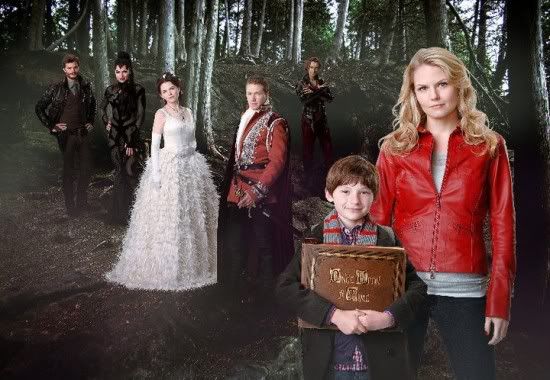
Don't let their pleasant, perfectly posed appearances fool you - it's a bad show
I watched the first episode and half of the second episode before stopping. I just couldn’t stand it anymore. Once Upon a Time, at least as much as I saw, seems to lack all subtlety in its premise of Fairy Tale characters living in the present day. Its characters lack depth, its story is overly complicated and it takes incredible leaps in logic to fit those complications into place. But perhaps worst of all, Once Upon a Time violates storytelling rule No. 1 – Show, Don’t Tell.
That’s why audiences are not stupid. If writers and producers treat their stories with respect and skill, then the average audience will gladly suspend their disbelief for even the wildest of ideas.
This is why Once Upon a Time fails. It tells the audience what the series is about – constantly, in fact – rather than showing the audience and letting them figure parts of it out on their own.
Think about Star Wars for a moment and ask yourself: Did anyone at any time explain the Star Wars universe? Aside from the famous opening scroll that set up the Empire vs. Rebellion storyline, did anyone ever explain why humans and aliens were living side-by-side? Why there were multiple populated planets? How the Empire came to be? How the Jedi discovered the Force?
No, and they didn’t have to explain.
Star Wars had such compelling characters and such a fun story, grounded in a quasi-reality, that audiences just embraced whatever was thrown at them on screen. It was perfectly normal that Luke and Uncle Owen would go shopping for robots when a giant tank rolled up to their house, piloted by little, squeaking, hooded aliens. There’s nothing silly at all about a bar full of wacky monsters and weird instrumental music, where a normal-looking human is the most badass person around. A giant space station as big as a moon capable of destroying entire planets wasn’t crazy, it was perfectly legit!
Though they may have lost the audience with the Ewoks. But I think people were more bothered that such a primitive and diminutive race could defeat the mighty Empire, rather than there being Ewoks in the first place.
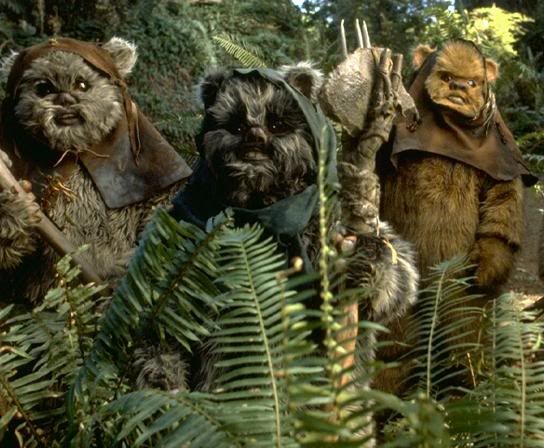
Horrible, filthy creatures
Compare this to the opening of Once Upon a Time. The pilot episode also starts with a text introduction. But rather than set up the story, the text lays out the premise of the show as plainly and as dumbed-down as possible:
Once upon a time. There was an enchanted forest filled with all of the classic characters we know. Or think we know. One day they found themselves trapped in a place where all their happy endings were stolen. Our world. This is how it happened…
First of all, that opening text uses the awkward ‘second person’ narrative style. It says ‘we’, and in later episodes it refers to the Fairy Tale characters that ‘you’ know, meaning the audience. This breaks the fourth wall in a very awkward way. Second of all, we haven’t met any of the fairy tale characters, and already its telling us that they’re trapped in our world.
Why couldn’t the show wait five minutes let us see that for ourselves?
After the text, the pilot immediately opens to the classic scene of Prince Charming finding Snow White ‘dead’ in the woods, with the Seven Dwarves having made a casket for her in the forest. He kisses her, she wakes up and then we get on with the show. The premise of the series is that all Fairy Tale characters, from Snow White to Rumpelstiltskin to Pinocchio, have been transported from their fairy tale world into our world, but they’ve forgotten who they are. The more specific story is that the long-lost daughter of Snow White (who doesn’t know of her connection to the Fairy Tales) is the key to awakening all the characters and possibly returning them to their fairy tale world.
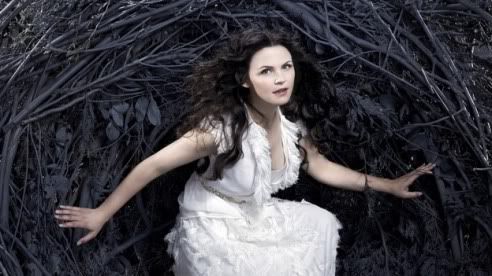
Snow White - The Fairest One of All - gets knocked up
All of this is laid out pretty well in the pilot episode. In fact, it’s smacked over our heads every few minutes. But I don’t think anybody could see that opening scene and not immediately recognize Snow White and the Seven Dwarves. We then later see Snow White, Prince Charming and the Seven Dwarves living as normal people in the real world, immediately recognizable. Yet rather than let the audience discover the fairy tale premise on their own, somebody behind the production of the show decided to spell it all out and simply tell the audience about it in the opening text.
Let me pose a hypothetical to you all. What if the show didn’t have that opening text and didn’t feature the constant flashbacks to the Fairy Tale world? What if it didn’t immediately spell out that the long-lost daughter, Emma, was in fact the long-lost daughter of Snow White? And didn’t immediately tell us which characters in the real world matched up with which Fairy Tales?
What if Emma found her way to Storybrooke, Maine (where all the Fairy Tale characters are trapped/living) for whatever reason and then both she and the audience spent the whole first season together figuring out who was who and how they had become trapped in the real world? Then the reveal that she’s the long-lost daughter of Snow White would actually come as a surprise to the audience in a later episode! As would the identity of Snow White in the first place. And we could all gasp and say, “She was your mother the whole time!?” Or we could get shocked when he learned that the rich businessman in town was actually Rumpelstiltskin.
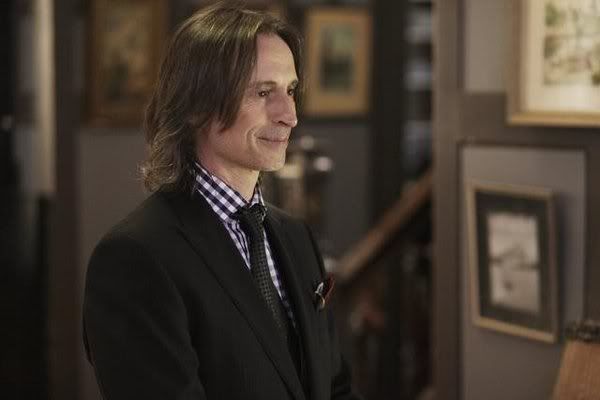
This guy, right here, is Rumpelstiltskin. There is no mystery involved whatsoever
The premise is not hard at all to wrap your mind around: classic Fairy Tale characters are living in the real world. That’s it.
Audiences will easily understand that. They probably knew it going in when they decided to watch the show. But as I’ve said, Once Upon a Time just keeps telling us the premise, over and over again. They do this by including a character whose only purpose seems to be to remind us of the premise: Henry.
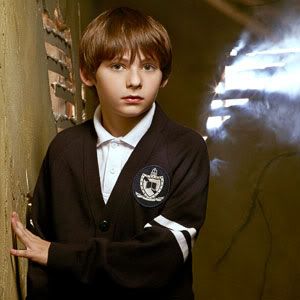
Insufferable little bastard
For whatever reason, this little boy knows everything there is to know about the Fairy Tales. He has this seemingly magic book that tells the story of how everyone got trapped in the real world, and he knows who everybody is. He uses the book to track down Emma so that she can save the day. Let me take a moment to talk about how silly this was in the pilot episode. Emma, the long-lost daughter of Snow White, is a bail bondsman in Boston. She doesn’t know of her true history, she only knows that she was abandoned as a baby and grew up in the foster system. She constantly reminds us that she didn’t know her parents and had a hard life growing up – which I find hard to believe, considering she’s a beautiful blonde woman. That was her up there in the red coat in the first picture.
Then one day, Henry suddenly shows up at her door and says that he is the son she gave up for adoption 10 years ago. He’s tracked her down. First, Emma immediately believes that this strange kid is definitely her biological son. Very little convincing necessary. Second, she immediately agrees not to call the police because Henry says he’ll just tell the cops she kidnapped him. And she figures that since she is his biological mother, the cops will believe Henry – despite the fact that she’d be the one calling the police. Third, Henry convinces her to drive him by herself back to Maine from Boston. She only met him 10 minutes ago, but she immediately decides to drive him all the way back to Maine without contacting any proper authorities.
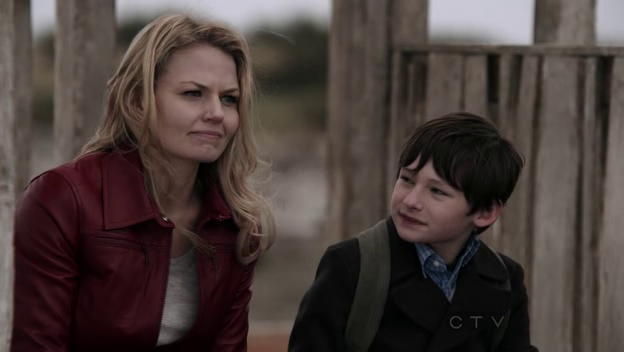
Yep, she looks glad she made the trip
And the whole ride to Maine, Henry is showing Emma his book and telling her all about the Fairy Tale characters and how she has to save them. There is absolutely no mystery involved in who the Fairy Tale characters are, how they got to the real world or that Emma has to save them. Henry constantly reminds her about the book and her destiny in both episodes that I watched. He never shuts up about it. This book is the only thing going for the kid. He has no friends, no video games; just the book.
Take the kid out of the show. Find some other reason to get Emma to Storybrooke, Maine. Show us the Fairy Tale characters in the real world, don’t tell us about them every five minutes.
Don’t worry, the audience will keep up. They’re not as stupid as you think they are, invisible TV show producers.
—————————————————–
Some other examples of showing and not telling?
The HBO show Game of Thrones is a complicated tale set in a fictional medieval world. It has dozens of important characters telling the story of warring family clans. But it doesn’t outright explain any of it to the audience. All you need to know comes up naturally and gradually through dialogue. Game of Thrones doesn’t carefully explain who all the warring families are, or why they are at war. Game of Thrones expects the audience to pay attention and keep up. When one character is revealed to be a bastard son of Ned Stark, Game of Thrones expects the audience to figure out for themselves why Ned’s wife doesn’t like the bastard son.
Or take the Green Lantern movie from this past Summer.
That movie opens with a long, complicated explanation of who the Green Lantern Corps are, how they use their Power Rings and who the main villain is going to be in the movie. Rather than just showing us the giant, clearly evil blob monster and letting us figure out for ourselves that he is the bad guy, the movie straight up tells us who he is and why he is evil. As for the exhausting explanation of the Green Lanterns, why bother telling us in the beginning of the movie when it’s going to be explained all over again to the main character halfway through the film? When Hal Jordan becomes a Green Lantern, the movie slows down to once again explain who the Corps is and how they use their Power Rings.
Why not wait to tell us all of this alongside the main character? Did they not think the audience would understand the concept of ‘space cops’ who have some sort of green-based super power?
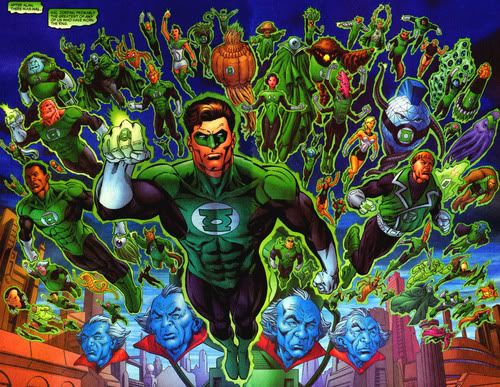
I mean, what's so complicated about this?

Posted on November 9, 2011, in Miscellaneous, Movies, Television and tagged Once Upon a Time. Bookmark the permalink. 2 Comments.

 Henchman-4-Hire
Audiences are lot less intelligent than you think. Over on hulu, several people were confused by who Ginnifer Goodwin had been in the fairy tale world. I guess the hair threw them off. Another woman is insulted by the way ‘birthmothers’ are portrayed. Yet another thinks there should be Christian themes in the show. Christian themes in a show that features evil sorceresses and fairies? Hmmm…
Pingback: Care About What I Watch, Will Ya? « Pop Culture Sushi